Dorsal Hump: Why You Have a Bump on Your Nose and How It Is Removed
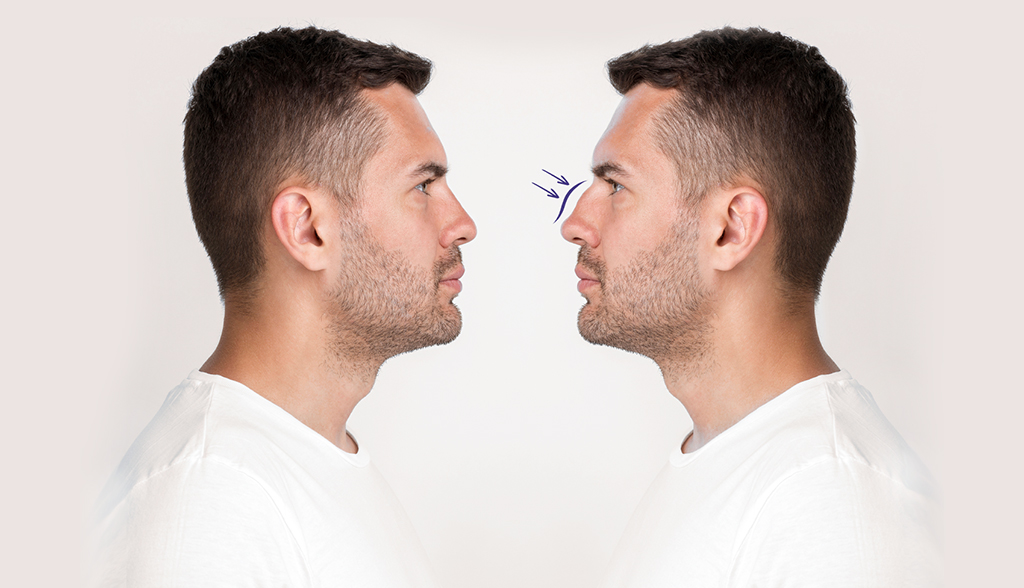
A dorsal hump is a bump of bone, cartilage or both on the bridge of the nose, most visible in profile. It is usually inherited, is not harmful and rarely affects breathing. Filler can soften how it looks for a while, but rhinoplasty is the only way to remove it permanently, and the best technique depends on what the hump is made of.
A hump on the bridge is one of the most common reasons people look into nose reshaping. Some people have noticed it since their teens, others only after an injury or when they see themselves side-on in photos. This guide explains what a dorsal hump is, why it forms, how to tell it apart from a new lump that needs checking, and what removing it actually involves.
💠 Key takeaways
- A dorsal hump sits on the bridge (dorsum) of the nose. It can be bony, cartilaginous or a mix of both.
- The most common cause is genetics. A broken nose that healed unevenly is the second most common cause.
- A hump that has been there for years is benign. A new, growing or bleeding lump is different and should be checked by a GP.
- Filler camouflages a small hump for months, but it does not remove it and carries a small risk to the skin’s blood supply.
- In the UK, rhinoplasty typically costs £4,000 to £7,000. Most people take up to 2 weeks off work, and swelling can take up to 6 months to go.
What is a dorsal hump?
“Dorsal” refers to the dorsum, the medical name for the bridge of the nose. A dorsal hump is any part of the bridge that rises above a smooth line from the top of the nose (the radix) to the tip. It is a description of shape, not a disease.
The bridge is built from two materials. The upper third is bone (the paired nasal bones), and the middle third is cartilage (the upper lateral cartilages, which join the septum in the midline). The point where bone meets cartilage is called the rhinion, and this is where most humps are highest. The American Society of Plastic Surgeons lists a “nose profile with visible humps or depressions on the bridge” among the main features rhinoplasty is designed to change.
The three types of dorsal hump
Knowing which tissue makes up the hump matters, because bone and cartilage are reduced with different tools and techniques.
Bony hump
Formed mainly by the nasal bones in the upper part of the bridge. It feels hard and fixed when you press on it.
Cartilaginous hump
Formed by the upper lateral cartilages and septum lower down the bridge. It feels slightly firmer than the tip but less hard than bone.
Combined hump
The most common type. Bone and cartilage both rise at the rhinion, so the hump spans the upper and middle thirds of the bridge.
Pseudo-hump
The bridge itself is normal but looks raised because the tip droops or the top of the nose (radix) is low. Shaving the bridge here makes things worse.
Why a pseudo-hump matters
If a hump is an illusion created by a droopy tip or deep radix, the fix is to lift the tip or build up the radix, not to remove bone. This is one reason a profile assessment in person is essential before any decision about surgery.
What causes a dorsal hump?
Genetics
By far the most common cause. The shape of the nasal bones and cartilage is inherited, so a hump often runs in families.
Growth in puberty
The nose keeps growing through the teenage years. A hump that was barely visible in childhood often becomes obvious between about 13 and 18.
Injury to the nose
A broken nose can heal with extra bone (a callus) or with the bones slightly displaced, leaving a bump that was not there before.
Previous surgery
An under-corrected hump, or a callus forming where bone was reduced, can leave a residual bump after earlier rhinoplasty.
Allergies, sinus problems and nasal polyps sit inside the nose. They can block breathing, but they do not create a hump on the outside of the bridge. A hump can, however, become more noticeable with age as the tip loses support and droops slightly, which makes the bridge look higher in comparison.
Hump or new lump? When to see a GP
A true dorsal hump is symmetrical, sits in the midline, feels like part of the nose’s framework and has been there for years. Anything that behaves differently should be looked at by a doctor before cosmetic surgery is considered.
See your GP if a bump on your nose:
- Has appeared or changed recently, or is getting bigger
- Sits to one side rather than in the centre of the bridge
- Bleeds, crusts or forms a sore that does not heal within a few weeks
- Has shiny, pearly, red or scaly skin over it, or feels hot and painful
Does a dorsal hump affect breathing?
Usually not. Breathing depends on the structures inside the nose, such as the septum, the turbinates and the internal nasal valves, not on the outside profile. A hump and a breathing problem can exist side by side, for example when a broken nose has caused both a bump and a deviated septum, and both can then be treated in the same operation.
What matters for breathing is how the hump is removed. The middle third of the bridge supports the internal nasal valve, the narrowest part of the airway. If cartilage is taken away without rebuilding that support, the middle of the nose can narrow or collapse inwards over time. Good hump surgery plans for this from the start, as explained below.
Can you get rid of a dorsal hump without surgery?
Not permanently. A “non-surgical nose job” uses dermal filler, usually hyaluronic acid, injected above and below the hump so the bridge looks straighter in profile. The hump is still there; the areas around it are built up to match it. This suits small humps in people who are happy for the bridge to look the same height or slightly higher.
- Results are temporary, typically lasting from several months to around 2 years, and need repeating
- The nose cannot look smaller, because filler only ever adds volume
- There is a small but serious risk of filler blocking a blood vessel. A 2024 systematic review in Aesthetic Plastic Surgery covering 30 studies and 9,657 non-surgical rhinoplasty patients found arterial occlusion in 0.27% of patients
Nose exercises, massage, taping, clips and “nose shaper” devices do not change bone or cartilage, so they cannot reduce a hump.
How rhinoplasty removes a dorsal hump
Hump reduction is more than shaving a bump down. Lowering the bridge changes the support of the whole nose, so the operation is planned in steps. It can be done through a closed or open approach; small, simple humps can often be treated through incisions inside the nostrils, while larger humps or combined tip work usually suit an open approach.
Preservation rhinoplasty
Preservation (or dorsal preservation) rhinoplasty is a newer approach. Instead of removing the top of the bridge, the surgeon removes a strip of tissue underneath it and lowers the whole bridge as one piece, keeping its natural surface intact. A 2023 systematic review in Aesthetic Plastic Surgery reported that patient satisfaction scores rose from 62.13 to 91.14 after preservation rhinoplasty, but noted that the technique is mainly used for smaller humps and that high-quality comparative evidence is still limited. It is not suitable for every nose, which is why technique choice should follow a careful assessment rather than a trend.
“The results cannot be guaranteed, there are risks to consider.”
NHS, Nose reshaping (rhinoplasty)
Filler vs surgery at a glance
| Non-surgical (filler) | Rhinoplasty | |
|---|---|---|
| What it does | Camouflages the hump by adding volume around it | Removes the hump and reshapes the bridge |
| Best for | Small humps, people who do not want surgery | Small to large humps, combined tip or breathing concerns |
| Can the nose look smaller? | No | Yes |
| How long it lasts | Months to about 2 years | Permanent |
| Downtime | Minimal | Up to 2 weeks off work |
| Main risk | Vascular occlusion (rare but serious) | Surgical risks, contour irregularity, revision |
How much does dorsal hump removal cost in the UK?
The NHS states that “the cost of nose reshaping in the UK ranges from £4,000 to £7,000”. A simple, closed hump reduction may sit towards the lower end of this range, while open surgery with tip work, grafts or a revision costs more. Cosmetic rhinoplasty is not usually available on the NHS, and your quote should include the surgeon, anaesthetist, hospital stay and aftercare.
Recovery timeline after hump removal
Bony work causes more bruising around the eyes than cartilage work alone, but this settles quickly. The NHS notes that “it might be several months before you see the full effect of the operation, and up to 6 months for the swelling to completely go.” Before surgery, our guide on how to prepare for rhinoplasty explains what to avoid and how to plan your time off.
Realistic results
The goal is a bridge that looks straight or gently curved in profile and fits your face, not an artificially scooped nose. Many people choose to keep a very slight curve because it looks more natural. A removed hump does not grow back, although a small residual bump or a callus can occasionally appear as the bone heals, and early swelling can make the bridge look fuller for some weeks.
A hump often comes with other concerns, such as a crooked nose after an injury or a bulbous tip, and these can be planned together. If you are of Middle Eastern, Mediterranean, Black or Asian heritage, our guide to ethnic rhinoplasty explains how the profile can be refined while keeping features that reflect your background. When you are ready, you can book a consultation or read our rhinoplasty FAQs.
Frequently asked questions
How do you get rid of a dorsal hump?
The only permanent way is rhinoplasty, which lowers the bone and cartilage of the bridge and then closes and supports the nose so it stays smooth and breathes well. Filler can hide a small hump for several months to about 2 years, but it does not remove it.
What causes a dorsal hump?
Mostly genetics. The hump usually becomes visible during the teenage growth spurt. A broken nose that healed unevenly, and occasionally previous nose surgery, can also cause one.
What ethnicity has dorsal humps?
Dorsal humps occur in every ethnic background. They are often described as a typical feature of many Middle Eastern, Mediterranean and some European noses, but the shape varies widely between individuals and families.
Can a dorsal hump be attractive?
Yes. Many people see a hump as a strong, characterful feature and choose to keep it. Treatment is a personal choice, and many people who have surgery ask for the hump to be softened rather than removed completely.
Does a dorsal hump affect breathing?
Usually not, because breathing depends on structures inside the nose. If you also have a blocked nose, often from a deviated septum, both problems can be treated in the same operation.
Can a dorsal hump grow back after surgery?
The removed hump does not grow back. A small residual bump, a callus where bone was reduced, or early swelling can sometimes look like a return of the hump, and a minor revision is occasionally needed.
How long is recovery after dorsal hump removal?
A splint stays on for about 7 days, bruising fades in around 3 weeks and most people are back at work within 2 weeks. Strenuous exercise waits 4 to 6 weeks, and swelling can take up to 6 months or longer to settle completely.
Sources
- American Society of Plastic Surgeons. Rhinoplasty: what rhinoplasty can treat.
- NHS. Nose reshaping (rhinoplasty). Page last reviewed 22 September 2023.
- Systematic review of complications of non-surgical rhinoplasty, 30 studies and 9,657 patients. Aesthetic Plastic Surgery. 2024.
- Exploring the Resurgence of the Preservation Rhinoplasty: A Systematic Literature Review. Aesthetic Plastic Surgery. 2023;47:1488–1493.
This article is for general information only and is not a substitute for personalised medical advice. Suitability, techniques, risks and outcomes can only be determined during a consultation with a qualified surgeon. All surgery carries risks, which will be explained to you in full beforehand.