- 15,000+ Patients
- Personalised Care
- 5-Star Rated
- Real Results
25+ yrs of excellence – consultation, procedure and aftercare.
Understanding lipoedema
Lipoedema causes fat to accumulate abnormally and symmetrically in the legs, hips, buttocks and sometimes the arms, while the hands and feet stay slim. The tissue behaves differently from ordinary body fat. It is often painful, tender to pressure and bruises easily, and it does not respond to dieting the way the rest of the body does.
It affects women almost exclusively, and usually appears or worsens around puberty, pregnancy or menopause. It is not obesity and it is not lymphoedema, though it is routinely mistaken for both, which is why so many women spend years being treated for the wrong thing.
Three things you have probably been told
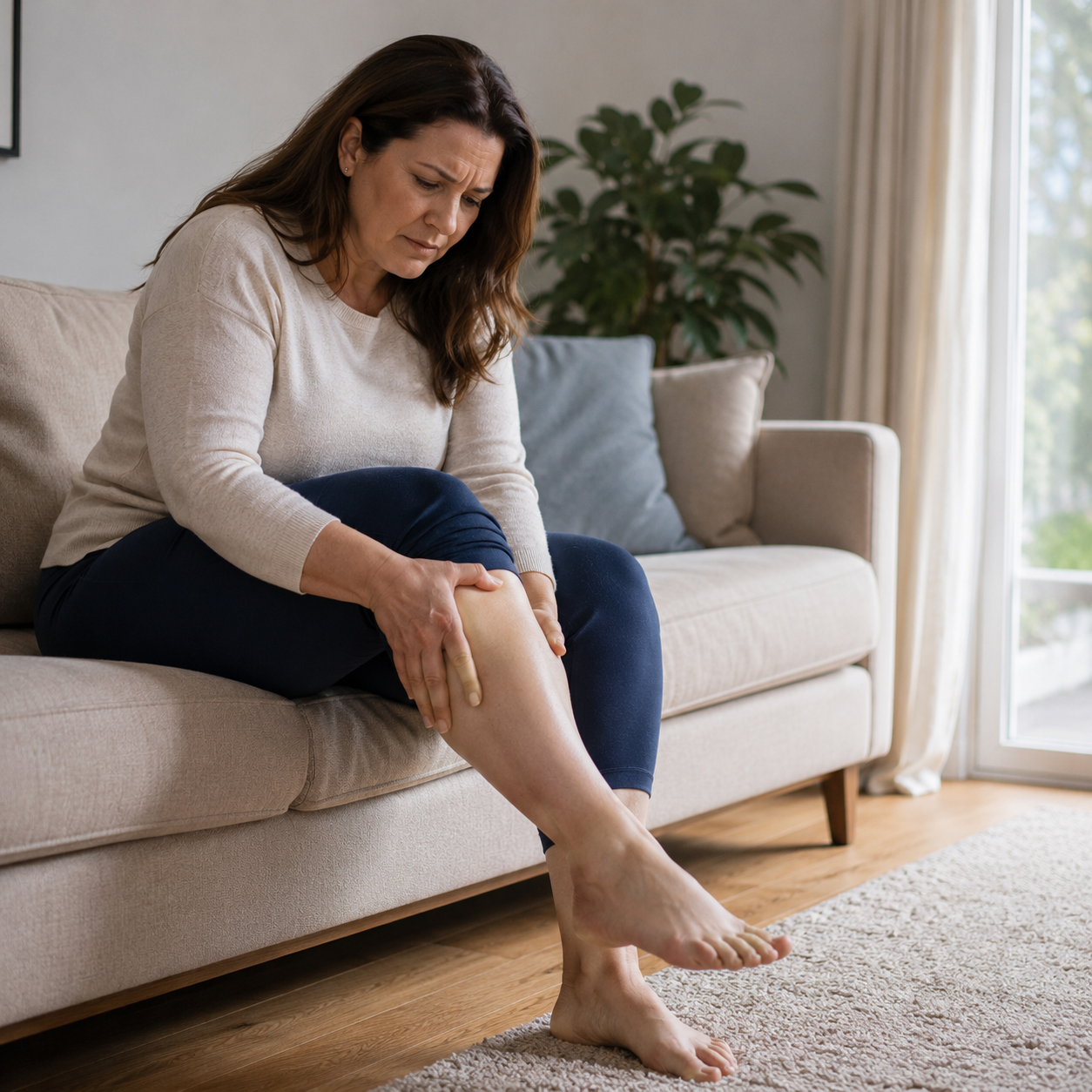
“It will go if you diet.” Dieting does not reduce lipoedema fat. It affects the rest of your body, which is often why the disproportion becomes more noticeable rather than less.
“You just need to move more.” Many women arrive convinced they have done something wrong. They have not. Lipoedema is a recognised medical condition and it occurs in women at every size.
“The bigger the legs, the worse the pain.” Not so. A woman at stage one can be in significant pain with little visible change. We treat symptoms and mobility.
Does this sound like you?
- Pain in the affected areas
- Sensitivity to touch and pressure
- Heavy legs after standing or stairs
- Bruising with no obvious cause
- Hands and feet noticeably slim
- Lumpy or hardened tissue beneath the skin
- Feeling cold in the limbs
- Little change despite diet and exercise
This is a guide, not a diagnosis. Only a clinical examination can confirm lipoedema.
Why patients come to us
A specialist assessment, not a sales consultation
A full clinical examination. Inspection, palpation and ultrasound, including the pinch test and the Stemmer sign, so you leave knowing whether it is lipoedema, what stage it is at and which areas are affected.
Conservative care first. Surgery is not the starting point and it is not right for everyone. If compression and conservative management give you the relief you need, we will tell you so.
Lymph sparing technique. Lipoedema surgery is not cosmetic liposuction. The technique is designed to remove diseased tissue while protecting the lymphatic vessels running through it.
Lifetime aftercare, included. Compression fitting, scheduled reviews and 24/7 support, with no hidden fees.

How lipoedema is diagnosed
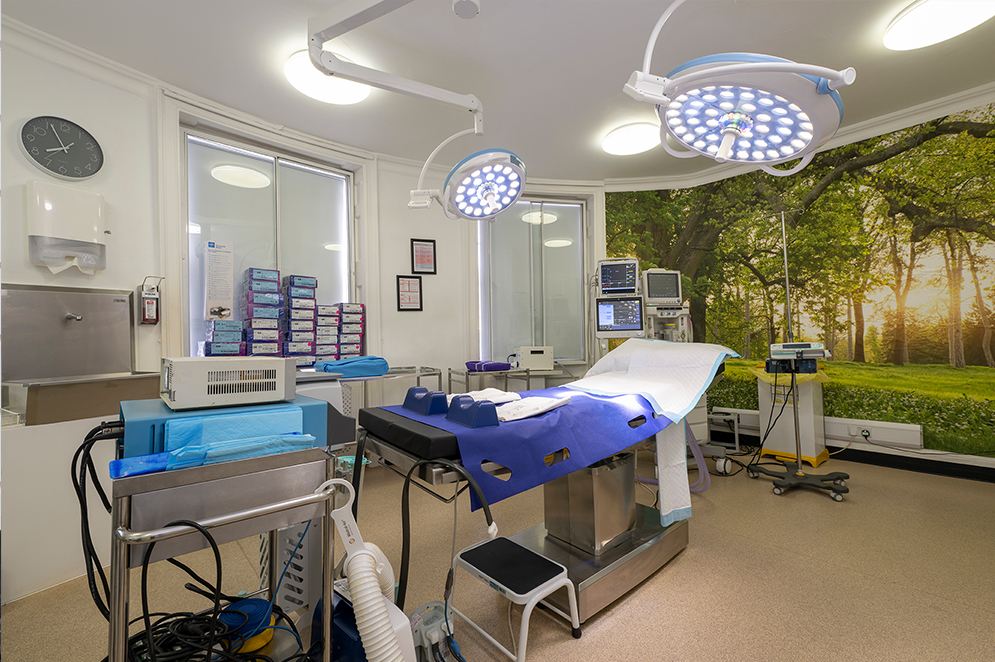
There is no blood test for lipoedema. Diagnosis is clinical, and it starts with your history: when symptoms began, how they have progressed, and how they relate to the hormonal events in your life.
The examination then follows three steps. We look at the pattern of fat distribution, the cuff effect where the leg meets the ankle, and the fat pads that typically form below the knee and elsewhere. We assess the tissue by hand, including the pinch test for pain sensitivity and the Stemmer sign, which helps distinguish lipoedema from lymphoedema. Ultrasound then measures the fat layer against normal values and helps rule out other conditions.
Lipoedema also travels with other conditions more often than most people realise, including thyroid disorders, venous disease and PCOS. We will discuss whether any of these are worth investigating and can write to your GP.
You leave with a diagnosis, a stage, a type and a written summary.
How lipoedema is treated
There is no cure. Treatment aims to relieve symptoms, protect mobility and improve quality of life, and the right approach depends on how much the condition is affecting you.
Conservative care. Compression is the single most effective measure, particularly custom made flat knit garments. Manual lymphatic drainage, low impact movement and an anti inflammatory diet all help. Swimming is worth singling out, because the pressure of the water works rather like gentle lymphatic drainage.
Surgery. Where symptoms persist after six months or more of conservative therapy, and pain or mobility are significantly affected, lymph sparing liposuction may be discussed.
Lymph sparing liposuction
The technique uses tumescent fluid and a slower, more deliberate approach than cosmetic liposuction, with the protection of the lymphatic system as the priority. Fat cells removed do not grow back in the treated area, though lipoedema can still develop elsewhere.
Treatment is staged. Large volumes cannot be removed safely in one operation, so most patients have a planned series of procedures with recovery between each. Your surgeon will set out the likely number at consultation. Compression garments are worn after each stage and this materially affects the result.
What to expect
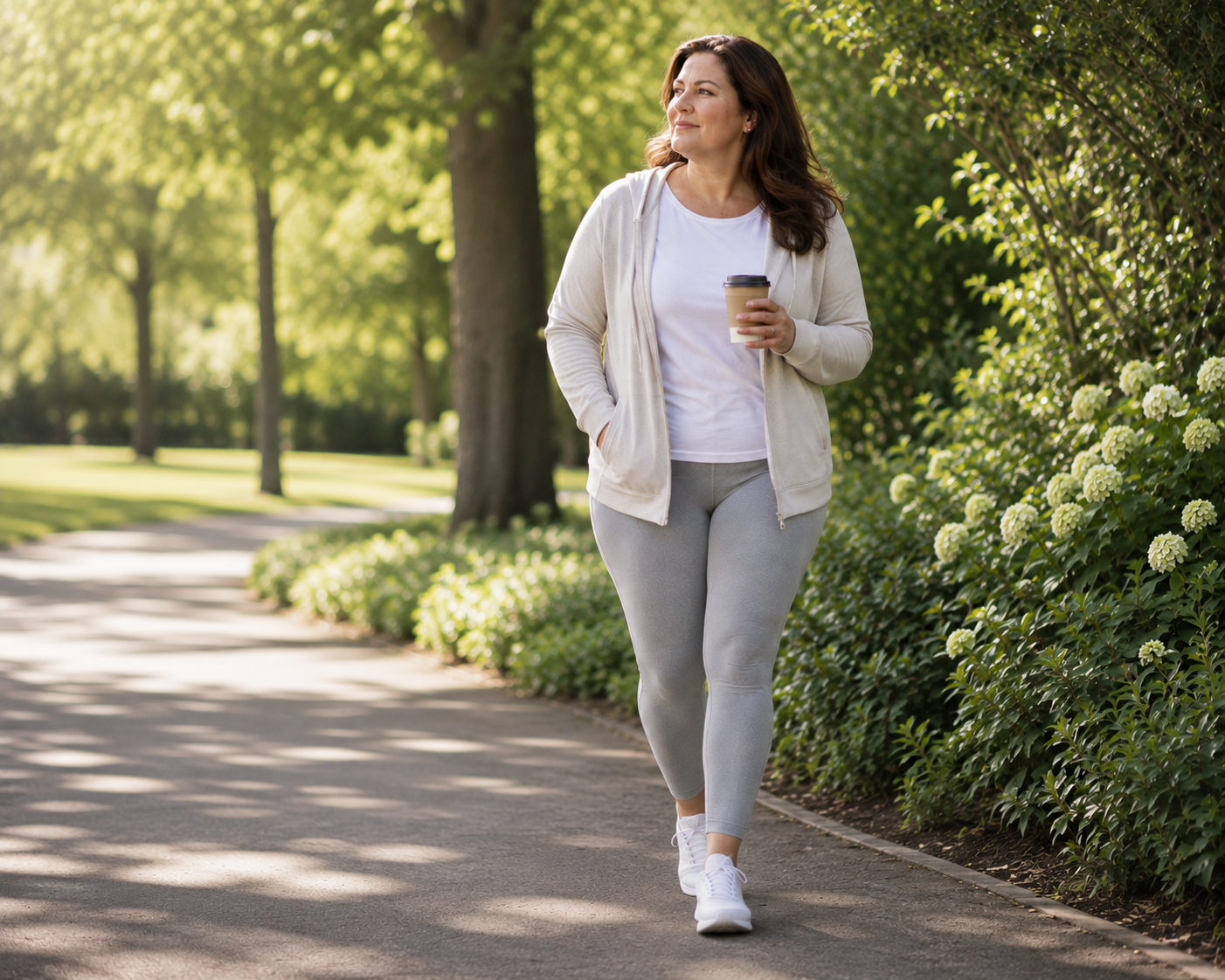
Most of our patients come to us because of pain, not appearance. Where treatment works well, that is usually where the difference shows first.
Patients who do well typically report less pain and tenderness in the treated areas, less bruising, and limbs that feel lighter by the end of the day. Walking becomes easier, stairs stop being something to think about, and standing for long periods is less punishing. Many find they can be more active than they have been in years, which in turn helps with the ongoing management of the condition.
The fat cells removed during surgery do not return in the treated areas. Clothes tend to fit more predictably, and a good number of our patients tell us the change they value most is simply not thinking about their legs all day.
We measure success by how you feel and how you move, not by dress size.
Surgery does not cure lipoedema. It is a chronic condition and management continues for life. Some patients need more stages than first anticipated, and individual results vary.
Like any surgery it carries risk, including fluid imbalance, deep vein thrombosis, infection, seroma, changes in skin sensation and contour irregularity. Your surgeon will go through all of this in detail before you consent to anything, and will tell you if surgery is not right for you.
Questions & Answers
Some common questions we get asked about Lipoedema
Is lipoedema the same as being overweight?
No. It is a distinct condition affecting women of every size, including those at a healthy weight, and the affected tissue does not respond to dieting the way ordinary body fat does.
Does it get worse over time?
It is chronic and progressive. Conservative therapy eases symptoms but does not halt it. Fat cells removed surgically do not return in the treated area.
How many operations will I need?
Most patients need more than one. The number depends on your stage, type and the areas affected, and it is planned with you before you begin.
Will I need compression garments?
Yes, after each stage, and many patients continue with compression long term as part of ongoing management.
Is this the same as Vaser liposuction for body contouring?
The equipment overlaps but the technique, planning and purpose differ. Lipoedema surgery prioritises protecting the lymphatic system and aims at symptom relief rather than contour.
How Long Does The Liposuction Procedure Take?
The duration of the operation will depend on the technique and the amount of fat removal.
What Are The Risks of Liposuction?
- Unwanted lumps and bumps or an uneven appearance. You can minimise risk by selecting a highly qualified and skilled surgeon.
- Anaesthesia risks
- Bleeding
- Hematoma and seroma
- Bruising
- Necrosis
- Fat clots
- DVT
- Damages to nerves, muscles, blood vessels and organs, and changes in skin sensation
- Sagging skin
- Asymmetry
- Scarring or discolouration of the skin
- Cardiac or pulmonary issues
How Long Will Results of Liposuction Last?
The fat removed will be permanently eradicated; however, weight gain is still possible. Therefore, we advise patients to be as close to their ideal weight as possible before having the operation. Studies have found that with a sculpting technique or Vaser lipo, the fat will not return and instead, will distribute to other areas of the body.
Will There Be Scarring?
Small incisions (a few millimetres) are in discreet locations. Still, any type of scarring will often be minimal, depending on the patient’s skin type and other influences that may inhibit healing.
25,000+
Cosmetic Surgery Operations Performed
25+
Years Experience in Cosmetic Surgery

The LINIA Promise
- At LINIA, we promise to treat you as a valued individual with the utmost dignity and privacy.
- At LINIA, we promise to ensure that your treatment is tailored to your personal needs.
- At LINIA, we promise to provide post-operative care for life. T&C’s apply.
- At LINIA we promise to provide you free refinement surgery. T&C’s apply.
- At LINIA, we promise to be available for 24-hour cover.

Linia Cosmetic Surgery – London & Across the UK – As Seen On







What Our Patients Say
For over 25 years, patients have trusted us for expert treatments. Here’s what they have to say.
Just a quick note to say Thank you for my new boobs!!
I have always felt out of proportion, but now i feel whole for The first time in my life!
Thank you to you all for your care d expertise, and I hope to see you all again when I come down with Kristi next year.
Love Emma Baker (the twins!!)
🟊🟊🟊🟊🟊
Mr Aslam,
You kindly said you would be able to send me my “before + after” photo’s if I wrote to you, I would be grateful if I could have them to continue to admire your great work!!!
Many thanks,
🟊🟊🟊🟊🟊
Dear Mr Aslam, Thank you so much for everything you have done. I’m so happy with the results!
Best wishes,
🟊🟊🟊🟊🟊
Excellent service. Kind, friendly, reassuring and very professional from walking through the door to leaving resulting in outstanding results! Thank you
🟊🟊🟊🟊🟊
I honestly couldn’t recommend Linia enough, from start to finish they were absolutely amazing and my PC Lauren was such a star throughout. They turned what was a stressful situation for me from being let down by another company into such an exciting experience and my results are what I always dreamt of x
🟊🟊🟊🟊🟊
I just want to say a big thankyou to the whole team!! I am absolutely amazed with the result. It was exactly how I wanted my breast to be. Thankyou Dr. Irshad from the consultation to the actual surgery. Thankyou Mojdeh you have been amazing!! Made me feel comfortable throughout the journey and reassured me with everything. THANKYOU ALL❤️
🟊🟊🟊🟊🟊
The process was amazing from start to finish. Dr Irshad did an amazing augmentation and I’m extremely happy with my results. His team were great. My Patient Support Advisor Jayne was always on hand if I had any issues or questions. I felt in safe hand with the surgical team. The hospital was lovely, clean and staff were friendly. I would 100% use them again in the future!
🟊🟊🟊🟊🟊
The experience was absolutely amazing. I was in and out within 4 hours. The employees were very friendly and helpful. Mr Aslam was wonderful. He talked me through every step of the process. I was very well looked after and would highly recommend him to anyone. Many thanks to everyone at Harley St. Sobia you have been great. Thank you!
🟊🟊🟊🟊🟊
I had a ba 3 weeks ago and I cannot THANK everyone enough. Everyone I met were amazing with me and so kind. I got quite emotional when I woke up after surgery and the ladies looking after me cared for me so much and I can’t be happier. Definitely recommend x
🟊🟊🟊🟊🟊
I had treatment with Dr Aslam, he and his staff are lovely, attentive and caring. Dr Aslam did an exceptional job with my treatment. Something that was my biggest insecurity I feel is now one of my assets! Highly recommend! Thank you so much for everything you have done.
🟊🟊🟊🟊🟊
Had treatment by Dr. Irshad at Harley Street. Cant thank him or his team enough, the results are amazing!! Highly recommend Linia and Dr. Irshad for anyone looking into cosmetic surgery. The first consultation, the operation and post-op meetings have been great! 10/10
🟊🟊🟊🟊🟊
I can’t thank Linea enough for the amazing experience they provided me with, from consultations all the way through to post op appointments. Dr Aslam and his team were fantastic , I would highly reccomend them!
🟊🟊🟊🟊🟊
I’ve no complaints at all his surgery and staff are great and he’s in Harley Street(London) for a reason thanks Dr Aslam your clearly a very skilled professional
🟊🟊🟊🟊🟊
Very good experience, excellent environment and good treatment. Recommended
🟊🟊🟊🟊🟊
Hello Everyone – I recently attended Linia Cosmetic Clinic at Harley Street. Yes! I was scared, nervous and excited at the prospect of an “S” lift, eye procedure and B.A whilst being aware and awake. SOUNDS silly but l enjoyed it, listening to everything being explained and some lovely music of my choice. Most important of all were the staff and Mr Aslam who made you feel relaxed and confident. So anyone considering? GO FOR IT.
🟊🟊🟊🟊🟊
Neck Lift Procedure – Quick and Efficient. Good Quality Care and Follow Up. Very Good Results. Pleasant and Professional Staff. Experience was as Described.
🟊🟊🟊🟊🟊
Upper Eye Lid Surgery – I would highly recommend Linia they were very efficient from consultation through to the aftercare. I am very pleased with the surgery Dr Aslam carried out. I had the same surgery 10 years ago with Spire with minimal success. Thank you Linia.
🟊🟊🟊🟊🟊
Customer Service was excellent, staff were very supportive both prior to and following the procedure, answering any questions, worries or concerns that I had very quickly and thoroughly. Would recommend Linia and would definitely consider other procedures to be performed at Linia
🟊🟊🟊🟊🟊
Dr Aslam has been great during this experience. The Linia team and nurse staff have also done all they could to support me. I found having my op under local strange at first (I have a fear of needles). I was very worried – but having it done was great compared to general. My recovery time was much less and I was back to work much sooner than expected.
🟊🟊🟊🟊🟊
Local anaesthetic was a much better experience than general. It was more relaxed and less painful. Recovery time was a lot quicker – there was no drowsiness or feeling sick. I would definitely use this option again if needed.
🟊🟊🟊🟊🟊
Latest Blogs

How an Ethnic Facelift Refreshes Your Face Without Changing Who You Are
An ethnic facelift is tailored to how your face ages, your skin and your features. Learn how ageing…

Afro Tummy Tuck: Planning for Smooth Scars and Natural Curves
An Afro tummy tuck is an abdominoplasty planned around darker skin, keloid risk and natural curves. Here is…

Deep Plane Facelift vs SMAS Facelift: How the Two Techniques Compare
Ask two surgeons how they perform a facelift and you may hear two different answers: a SMAS facelift…

Restoring Balance: When and How to Correct Asymmetrical Breasts
Some breast asymmetry is completely normal. Here is what causes uneven breasts, when to see a doctor, and…

Reshaping Confidence: A Complete Guide to Correcting Tuberous Breasts
A clear, comprehensive guide to tuberous (tubular) breasts: what they are, why they form, the grades of severity,…

Breast Reduction Scars: What to Expect and How to Minimise Them
Breast reduction is one of the most rewarding procedures in cosmetic and reconstructive surgery, offering relief from physical…

Scarless Breast Reduction: What It Really Means and Is It Right for You?
For many people considering breast reduction, the thought of visible scarring is one of the biggest concerns. It…

Restoring Breast Firmness After Pregnancy: A Complete Guide to Reducing Sagging Naturally
Breasts that look softer, emptier or lower after having a baby are one of the most common changes…



Request a consultation
"*" indicates required fields

Premier Cosmetic Surgery on Harley Street
Enquire Online
Opening Hours:
- Monday – Thursday10 am – 8 pm
- Friday10 am – 5 pm
- Saturday10 am – 4 pm
Are you ready to achieve the body you’ve always wanted?
in-clinic & Virtual consultations
Partners & Awards