Crooked Nose: Causes and How Surgery Straightens It
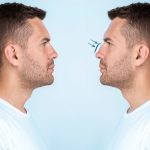
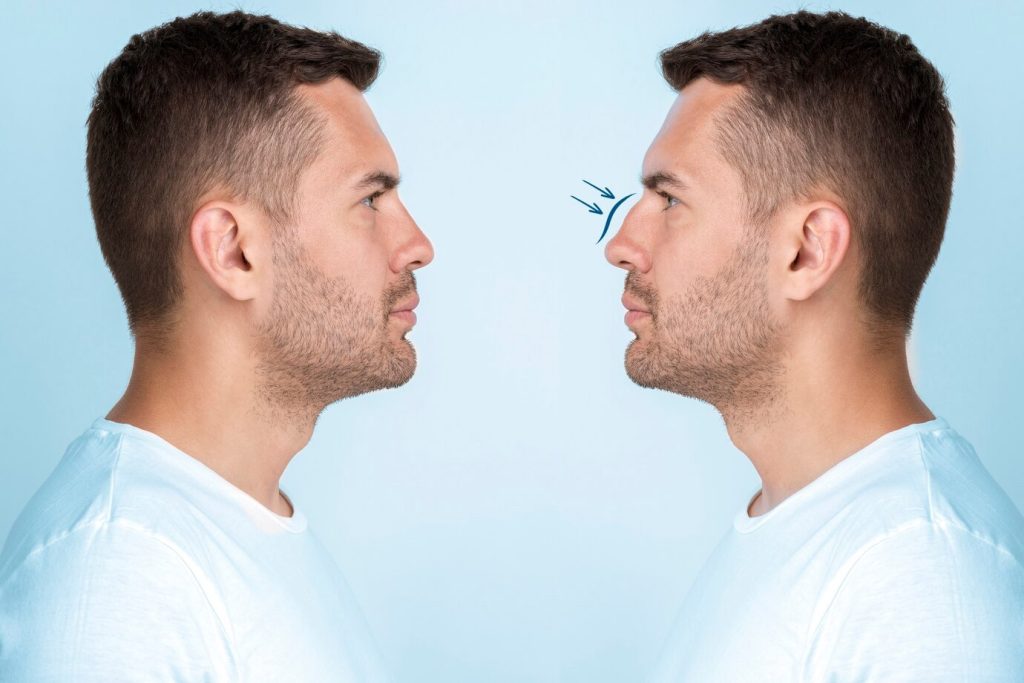
A crooked nose is a nose that is bent, twisted or off-centre rather than running in a straight line down the middle of the face. It is most often caused by an injury or by a deviated septum, the wall inside the nose that divides the two nostrils. Depending on the cause, it can affect breathing as well as appearance, and surgery called rhinoplasty or septorhinoplasty can straighten both the outside and the inside of the nose.
Most people have a slightly uneven nose, and that is completely normal. A crooked nose becomes a concern when the bend is noticeable, when it appeared after an injury, or when it comes with a blocked side or noisy breathing. This guide explains why noses become crooked, what to do after a recent break, and how nose surgery corrects a long-standing deviation.
💠 Key takeaways
- The most common causes are a past injury and a deviated septum, and the two often go together.
- If you have just broken your nose, it may be straightened without surgery, but this should be done within 3 weeks, before the bones set.
- A long-standing crooked nose needs surgery that straightens the bones, cartilage and septum together.
- If breathing is affected, straightening the septum can improve airflow at the same time.
- Perfect symmetry is not the goal. Everyone’s face is slightly asymmetric, and the aim is a nose that looks straight and balanced.
What is a crooked nose?
A crooked nose is one where the line from the bridge to the tip does not run straight down the centre of the face. The bend can be in the bony upper third, the cartilage in the middle, the tip, or all three. It may be subtle and only visible in photos, or obvious at a glance.
The American Society of Plastic Surgeons includes “nasal asymmetry” among the features rhinoplasty can improve, but also notes: “everyone’s face is asymmetric to some degree. Results may not be completely symmetric, although the goal is to create facial balance and correct proportion.”
Types of crooked nose
Surgeons often describe a crooked nose by the shape of its deviation, because each pattern needs a slightly different correction:
I-shaped (tilted)
The nose is fairly straight but sits at an angle, leaning to one side from top to bottom.
C-shaped
The nose curves to one side in the middle, like the letter C, often following a curve in the septum.
S-shaped
The nose bends one way and then the other, often due to a twisted septum or a previous injury.
Tip deviation
The bridge is straight but the tip points to one side because of uneven tip cartilages or a bent lower septum.
What causes a crooked nose?
- Injury. A broken nose from sport, a fall or an accident is the most common cause. If the bones heal out of position, the nose stays bent.
- A deviated septum. The septum is made of bone and cartilage. If it is bent, it can pull the outside of the nose with it.
- Development and genetics. Some noses simply grow unevenly, and a slight bend can be present from birth or adolescence.
- Previous surgery. Occasionally a nose becomes crooked after earlier nasal surgery as the tissues heal and contract.
A deviated septum is extremely common. A 2022 review in Cureus noted that “the reported prevalence rates of NSD [nasal septal deviation] ranging from 26% to 97%”, depending on how much deviation each study counted. The same review explains how the cause shapes the bend:
“However, nasal septum deviation (NSD) can be either developmental which is generally a smooth “C-shaped or S-shaped” deformity, or a result of trauma which is usually more dislocated and irregular.”
Alghamdi FS et al. Cureus, 2022
After a recent break: the 3-week window
If you have just broken your nose
The NHS advises that “a doctor in hospital may be able to make your nose straighter using a procedure called manipulation. You might have to go home and wait for the swelling to go down first, but the procedure should be done within 3 weeks of you breaking your nose, before the bones start to set.” Seek urgent help for heavy bleeding that will not stop, clear fluid from the nose, or difficulty breathing.
Once the bones have set, manipulation is no longer effective. A nose that has stayed crooked for months or years is corrected with surgery instead, usually at least several months after the injury once swelling has fully settled.
Crooked nose and breathing
A crooked nose is often more than a cosmetic concern. When the septum is bent, one side of the nose can feel blocked, especially at night or during exercise. The American Society of Plastic Surgeons describes a deviated septum as “one of the most common causes of breathing impairment”, corrected “by adjusting the nasal structure to produce better alignment.”
When breathing and appearance are treated together, the operation is called a septorhinoplasty. The NHS notes that nose surgery is not usually available on the NHS for cosmetic reasons, “but may be provided on the NHS if it’s needed to help you breathe.”
Non-surgical options
Dermal filler can sometimes camouflage a mild deviation by filling the hollow on one side so the nose appears straighter. It does not move bone or cartilage, it does not help breathing, and the effect wears off, so it suits only small, stable irregularities. Filler in the nose also carries a risk of complications and should only be done by an experienced medical practitioner.
How surgery straightens a crooked nose
A crooked nose is rarely fixed by changing one part alone. Because the bones, upper cartilages, septum and tip all work as one structure, a lasting correction usually addresses each part that is bent. Your surgeon may use a closed or open approach depending on how complex the deviation is.
Cartilage has memory
Bent cartilage tends to drift back towards its old shape, which is why surgeons often add support rather than simply straightening it. Even after careful surgery a slight deviation can remain, and a small number of patients choose a minor revision later. Read our guide on preparing for rhinoplasty to plan your recovery.
Recovery and cost
Recovery is similar to other nose surgery. According to the NHS, you may need up to 2 weeks off work, stitches and the splint usually come out after about a week, and it can take “up to 6 months for the swelling to completely go.” Avoid contact sports and anything that could knock your nose until your surgeon says it is safe.
The NHS puts the cost of nose reshaping in the UK at £4,000 to £7,000. Complex septorhinoplasty, grafts or revision surgery can cost more, and you should also allow for consultations and follow-up care.
If your nose has been crooked since an injury, or one side never feels clear, a consultation will assess both its shape and how well you breathe. You can book a consultation or read our rhinoplasty FAQs. If your bridge has also collapsed after an injury, our guide to saddle nose may help.
Frequently asked questions
What causes a crooked nose?
Most often a past injury that healed out of place or a deviated septum, and the two frequently occur together. Some noses also grow unevenly, and a few become crooked after earlier surgery.
Can a crooked nose be fixed without surgery?
A recent break can be straightened by manipulation within about 3 weeks of the injury. After that, only surgery can straighten the bones and cartilage. Filler can disguise a very mild bend but does not straighten the nose or help breathing.
Is a crooked nose caused by a deviated septum?
Often, yes. A bent septum can pull the outside of the nose to one side. Some degree of septal deviation is very common, but only some cases affect appearance or breathing.
Can a crooked nose affect breathing?
Yes. A deviated septum is one of the most common causes of a blocked nose. Septorhinoplasty can straighten the nose and improve airflow in the same operation.
Will my nose be perfectly straight after surgery?
The aim is a nose that looks straight and balanced, but no face is perfectly symmetrical. Cartilage can also drift slightly as it heals, so a small residual bend is possible.
Is crooked nose surgery available on the NHS?
Not usually for cosmetic reasons. The NHS may provide surgery if it is needed to help you breathe, which is assessed by an ENT specialist.
How long after a broken nose can I have rhinoplasty?
Once the bones have set, surgeons usually wait several months for swelling to settle fully before correcting a crooked nose, so the result is predictable.
Sources
- American Society of Plastic Surgeons. Rhinoplasty.
- Alghamdi FS, Albogami D, Alsurayhi AS, et al. Nasal Septal Deviation: A Comprehensive Narrative Review. Cureus. 2022;14(11):e31317.
- NHS. Broken nose. Page last reviewed 17 August 2023.
- NHS. Nose reshaping (rhinoplasty). Page last reviewed 22 September 2023.
This article is for general information only and is not a substitute for personalised medical advice. Suitability, techniques, risks and outcomes can only be determined during a consultation with a qualified surgeon. All surgery carries risks, which will be explained to you in full beforehand.