
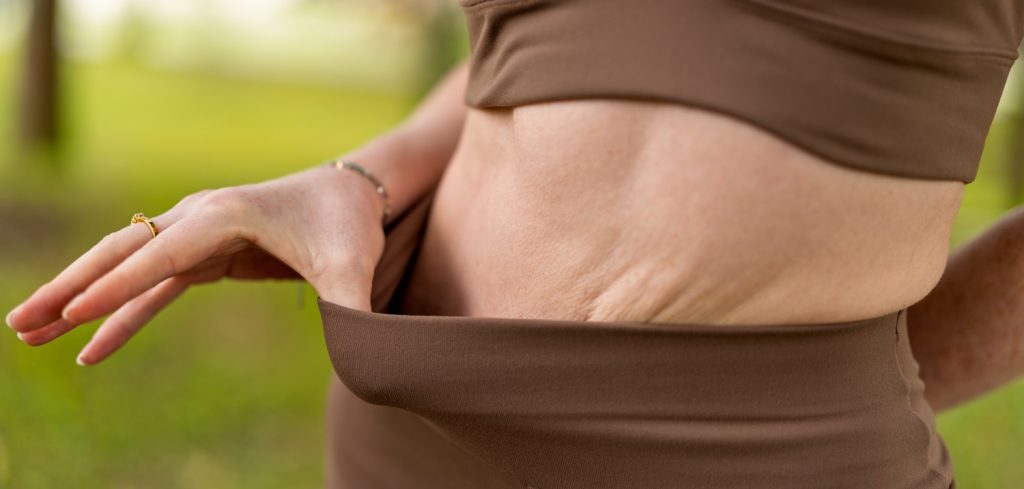
How Lower Body Lift Surgery Removes Excess Skin and Transforms Your Silhouette
A lower body lift, also called a belt lipectomy or circumferential body lift, removes loose skin and excess tissue from the abdomen, hips, flanks, outer thighs and buttocks in a single operation. It is the most extensive procedure in body contouring surgery, and for people who have lost a very large amount of weight it is usually the only thing that resolves skin that no longer fits the body underneath.
It is also a major operation with a meaningful complication rate. A pooled analysis of 28 published studies covering 1,380 belt lipectomy patients recorded an overall complication rate of 37%. That number is not a reason to avoid the procedure. It is a reason to choose the right moment, the right surgeon and the right preparation, all of which this guide covers in detail.
- A lower body lift treats the abdomen, flanks, hips, outer thighs and buttocks in one circumferential operation.
- Surgery typically takes four to six hours under general anaesthetic.
- The pooled complication rate across 1,380 patients is 37%, most of it wound healing issues rather than serious events.
- Complication risk rises to around 50% when BMI is above 32 at the time of surgery.
- Weight should be stable for at least six to twelve months beforehand.
- Stopping smoking at least one month before surgery is standard clinical advice.
- Most people return to desk based work in two to three weeks and full exercise at about twelve weeks.
- Scars are permanent and take twelve to eighteen months to mature.
overall complication rate across 28 studies and 1,380 belt lipectomy patients
Pooled analysis, NIH StatPearls
complication rate reported when BMI is above 32 at the time of surgery
NIH StatPearls
rise in seroma risk for every extra pound of skin removed
Shermak et al., PRS 2008
seven year weight regain with body contouring, against 10.8% without it
Balagué et al., PRS 2013
Figures come from the peer reviewed sources listed at the end of this page. They describe the published study populations and are not a prediction of your individual outcome.
1 What Is a Lower Body Lift?
A lower body lift is a single operation that removes a continuous belt of excess skin and fat from all the way around the lower torso, then re drapes and tightens what remains. Because the incision travels the full circumference of the body, the abdomen, flanks, hips, buttocks and outer thighs are all lifted together rather than treated as separate problems.
Three names, one procedure
Belt lipectomy is the term most often used in the surgical literature, because the tissue removed forms a belt around the waist.
Circumferential body lift describes the same operation by its incision pattern.
Lower body lift is the term patients most often search for. All three refer to the same procedure. It is distinct from a tummy tuck, which addresses the front of the abdomen only and leaves the back and outer thighs untouched.
A lower body lift is not a weight loss procedure. The tissue removed is skin and fat that the body cannot retract on its own. Published series report an average of roughly 2 kg of skin excised, so the change on the scales is modest even though the change in shape is dramatic. Weight loss must come first, through diet, lifestyle or bariatric surgery, and then be held steady.
Most patients come to this operation after very substantial weight loss, whether through weight loss surgery on the NHS or privately, or through sustained lifestyle change. A smaller group come after pregnancy or after significant ageing related laxity. What unites them is a skin envelope that is now far larger than the body it covers.
2 Who Is a Good Candidate?
The strongest candidate has a stable weight, a BMI below roughly 32, no active smoking, corrected nutritional deficiencies and realistic expectations about scarring. These are not arbitrary preferences. Each one maps directly onto a measured difference in complication rates.
| Criterion | What is advised | Why it matters |
|---|---|---|
| Weight stability | Stable for at least six to twelve months | Weight gained after surgery stretches the new closure. Weight lost afterwards creates fresh laxity that the operation cannot anticipate. |
| BMI at surgery | Ideally below 32 | Complication rates rise to around 50% above this threshold, compared with 37% overall. |
| Smoking | Stopped at least one month before | Smoking impairs the blood supply that long incisions depend on, raising the risk of wound breakdown and skin necrosis. |
| Nutrition | Deficiencies identified and corrected first | Protein, iron, vitamin B12 and vitamin D deficiencies are common after bariatric surgery and directly impair wound healing. |
| General health | No uncontrolled diabetes or cardiovascular disease | This is a long operation under general anaesthetic with a real thromboembolic risk. |
| Expectations | Accepts permanent, extensive scarring | The trade is a long scar for a transformed contour. Patients who cannot accept the scar are not good candidates however good their anatomy. |
Patients are typically advised to stop smoking at least 1 month before the scheduled surgery to minimize these risks.
Belt Lipectomy, StatPearls, National Center for Biotechnology Information (NIH). Read the full clinical review
Psychological readiness belongs on this list too, even though no study can quantify it. Recovery is genuinely demanding for the first fortnight, you will need practical help at home, and the final contour is not visible for months. Patients who understand that in advance cope far better than those who do not.
3 The Procedure, Step by Step
A lower body lift is performed under general anaesthetic and typically takes four to six hours, depending on how much tissue is removed and whether other procedures are combined with it.
- Pre operative planning. Detailed consultations, clinical photography, measurements and a surgical plan. You receive instructions on nutrition, activity and medications to avoid in the weeks beforehand. Any nutritional deficiency is corrected at this stage rather than after.
- Marking. The incision is marked while you are standing, because gravity determines where the excess tissue actually sits. The line is placed at or just below the waistline so that it can be concealed by underwear and swimwear.
- Excision. The surgeon removes the marked belt of skin and fat around the full circumference of the body. Liposuction is sometimes used alongside this to refine areas that need contour rather than removal.
- Lifting and re draping. The abdomen is tightened in a manner similar to a tummy tuck, the outer thighs are elevated, the buttocks are lifted and repositioned, and the flanks are smoothed into the new waistline.
- Closure and drains. Incisions are closed in multiple layers with dissolvable sutures. Surgical drains are placed to remove fluid during early healing, and a compression garment is fitted before you leave theatre.

4 Recovery Timeline
Most patients stay at least one night in the clinic, return to desk based work in two to three weeks, and resume full exercise at around twelve weeks. Swelling continues to settle for several months after that.
The demanding phase. Swelling, bruising and discomfort are expected and managed with prescribed medication. Mobility is limited and you will need help with washing and dressing. A slightly bent posture when walking is normal, as it reduces tension on the closure. Drains usually come out within one to two weeks.
Comfort improves noticeably. Gentle walking is encouraged because it reduces clot risk, but heavy lifting, core strain and strenuous exercise are off limits. Sedentary work is usually possible at two to three weeks; physical jobs need longer. The compression garment is worn consistently throughout.
Mobility largely returns and the contour becomes progressively clearer as swelling resolves. Full activity including high impact exercise is typically cleared at around twelve weeks. Scars are pink and firm at this stage and take a further twelve to eighteen months to soften and pale.
Plan the first fortnight properly. Arrange help at home before your surgery date rather than after it. Patients who have organised meals, childcare, transport and someone to assist with washing consistently report an easier first two weeks than those who improvise.
5 Risks and Complication Rates, in Numbers
Honest numbers are more useful than reassurance. The figures below come from a pooled analysis of 28 published studies covering 1,380 belt lipectomy patients, as summarised in the NIH StatPearls clinical review.
| Complication | Reported rate | What it means in practice |
|---|---|---|
| Any complication | 37% | The great majority are wound healing issues that resolve with dressings and time rather than further surgery. |
| Wound dehiscence | 17% | Partial separation of the incision, most often where tension is highest. Usually managed with dressings and healing by secondary intention. |
| Seroma | 13% | Fluid collecting under the skin. Drains reduce it during the early period; some patients need aspiration afterwards. |
| Infection | 5% | Usually responds to antibiotics. Prompt reporting of redness, heat or discharge matters. |
| Skin necrosis | 4% | Loss of skin at the wound edge where blood supply is marginal. Strongly linked to smoking. |
| Haematoma | 3% | A collection of blood, occasionally requiring a return to theatre. |
| DVT or pulmonary embolism | 3% | The serious risk. Mitigated with compression stockings, anticoagulants and early mobilisation. |
An overall complication rate of 37%. The most common complications included seroma (13%) and wound dehiscence (17%). Other notable complications included infection (5%), skin necrosis (4%), hematoma (3%), and deep vein thrombosis/pulmonary embolus (3%).
Belt Lipectomy, StatPearls, National Center for Biotechnology Information (NIH), summarising a pooled analysis of 28 studies and 1,380 patients.
Seroma: the one that scales with how much is removed
Seroma deserves its own note because its risk is not fixed. Shermak and colleagues reviewed 222 body contouring patients at Johns Hopkins and found an overall seroma rate of 14%, rising to 18% specifically for circumferential belt lipectomy, compared with 12% for abdominal panniculectomy and 4% for thigh lift. The strongest predictor was simply how much tissue was taken.
Seroma risk increasing 9 percent for each additional pound of skin excised.
Shermak MA, Rotellini-Coltvet LA, Chang D. “Seroma development following body contouring surgery for massive weight loss: patient risk factors and treatment strategies.” Plastic and Reconstructive Surgery, 2008.
This is the practical reason surgeons care about your BMI and weight stability. It is not gatekeeping. The more skin that has to come off, the higher the fluid burden and the greater the tension on the closure.
Scarring is permanent and extensive. The incision runs the full circumference of the body. It is placed to sit under underwear and swimwear, and it fades substantially over twelve to eighteen months, but it does not disappear. Anyone who is not comfortable with that trade should not have this operation.
6 What the Evidence Says About Outcomes
Two questions come up repeatedly at consultation: does this actually make people feel better, and does it help them keep the weight off. There is published evidence on both, and it is worth being precise about how strong that evidence is.
Quality of life
A systematic review published in Obesity Surgery in 2018 pooled 13 studies covering 796 patients who had body contouring after bariatric weight loss. It found statistically significant improvements in physical functioning (28.5%, p=0.004), psychological wellbeing (45.7%, p=0.029) and social functioning (24%, p=0.001). Body image and sexual function also improved, but those changes did not reach statistical significance.
In summary, we demonstrate that BCS may improve QOL in patients who have previously undergone bariatric surgery.
Systematic review, “Does Body Contouring After Bariatric Weight Loss Enhance Quality of Life?” Obesity Surgery, 2018. Pooled data from 13 studies and 796 patients.
Long term weight control
Balagué and colleagues followed 98 patients who had body contouring after gastric bypass alongside 102 matched controls who had the bypass alone, tracking both groups for seven years. Mean weight regain was 3.6% in the body contouring group against 10.8% in the controls.
A note on how firm this finding is. Later studies have not all reproduced it, and some have found no weight control benefit from body contouring. The honest position is that the evidence points in a favourable direction but is not settled. Body contouring should be chosen for contour, comfort and quality of life, with any weight maintenance benefit treated as a possible bonus rather than a promise.
7 Combining a Lower Body Lift With Other Procedures
Massive weight loss rarely affects only the lower body. Many patients plan a sequence of procedures over one to two years rather than a single operation, because staging keeps operative time and thromboembolic risk within safe limits.
Upper body lift
Addresses loose skin across the back, chest and bra line, which a lower body lift does not reach. Usually staged rather than combined.
Arm lift (brachioplasty)
Removes excess skin from the upper arm, one of the areas most consistently affected after very large weight loss.
Inner thigh lift
The outer thigh is treated by the body lift itself, but significant inner thigh laxity needs its own procedure.
Breast surgery
Weight loss commonly leaves the breast both emptier and lower. An uplift, implants or a combination may be appropriate.
Liposuction
Vaser liposuction is often used within the same operation to refine contour where fat, rather than skin, is the issue.
Tummy tuck alone
If laxity is confined to the front of the abdomen, a tummy tuck achieves the goal with a shorter scar and an easier recovery.
Your surgeon will map out a sequence that prioritises safety over speed. Combining too much in one sitting lengthens anaesthetic time and raises the risk of exactly the complications listed above.
8 Preparing Well: A Practical Checklist
- Hold your weight steady for six to twelve months
- Stop smoking at least one month before surgery
- Have bloods checked for nutritional deficiencies
- Correct protein, iron, B12 and vitamin D levels first
- Get diabetes and blood pressure well controlled
- Arrange practical help for the first two weeks
- Prepare loose clothing that fastens at the front
- Book realistic time away from work
- Understand the scar before you consent to it
- Plan your scar care and follow up appointments
9 Frequently Asked Questions
How long does a lower body lift take?
Four to six hours under general anaesthetic in most cases. The exact time depends on how much tissue is removed and whether liposuction or other procedures are performed at the same time. Most patients spend at least one night in the clinic afterwards.
How risky is a lower body lift?
A pooled analysis of 28 studies and 1,380 patients found an overall complication rate of 37%. Most of that is wound healing: dehiscence at 17% and seroma at 13%. Serious events are much rarer, with DVT or pulmonary embolism reported at 3%. Risk rises sharply, to around 50%, when BMI is above 32 at the time of surgery.
How long do I need to wait after weight loss surgery?
Standard clinical advice is to wait until your weight has been stable for at least six to twelve months. Operating before the weight has settled means the skin envelope is still changing, which compromises the result and increases the chance of needing revision.
Will I lose weight from the surgery itself?
Only a small amount. Published series report an average of roughly 2 kg of excised skin. A lower body lift changes your shape and how clothes fit far more than it changes the number on the scales, and it is not a treatment for obesity.
Where will the scars be and how bad are they?
The scar runs the full way around the body, placed at or just below the waistline so that underwear and swimwear conceal it. It is permanent and it is long. Scars are pink and firm initially and take twelve to eighteen months to soften and fade. Silicone products and sun protection help, and your team will advise on when to start them.
When can I go back to work and to the gym?
Desk based work is usually possible at two to three weeks. Physically demanding jobs need longer. Light walking starts within days because it reduces clot risk, but heavy lifting and core work are avoided for six weeks, and full high impact exercise is typically cleared at around twelve weeks.
Is a lower body lift available on the NHS?
Body contouring after weight loss is generally treated as a cosmetic procedure and is not routinely funded. Some patients with significant functional problems, such as recurrent skin infections in the folds, are considered on an individual basis by their local commissioning body. Your GP can advise on whether an application is realistic in your area.
Will the results last?
The skin removed does not come back, so the improvement is durable. What can change the result is significant weight gain or loss afterwards, and normal ageing, which continues to reduce skin elasticity over time. Maintaining a stable weight is the single most effective thing you can do to protect the outcome.
Can I have a lower body lift if I still plan to lose more weight?
It is better to wait. Further weight loss after surgery creates new laxity that the operation was not designed around, and may leave you wanting revision. Reach your target, hold it for six to twelve months, then plan the surgery.
10 Why Choose Linia Cosmetic Surgery
Our surgeons have extensive experience in complex body lift surgery, including lower body lifts following bariatric surgery and sustained lifestyle weight loss. We operate in accordance with Care Quality Commission standards.
At consultation we will tell you plainly whether a full circumferential lift is the right operation for you, or whether a more targeted procedure from our body treatments range would achieve your goals with less downtime. If your weight is not yet stable, or a nutritional deficiency needs correcting first, we will say so and give you a realistic timeline rather than a booking date.
There is no obligation after a consultation, and we are happy to see you more than once before you decide.
Sources & references
- Belt Lipectomy. StatPearls, National Center for Biotechnology Information, NIH. NCBI Bookshelf, NBK604202. Source of the pooled complication rates across 28 studies and 1,380 patients, the BMI 32 threshold and smoking cessation guidance.
- Shermak MA, Rotellini-Coltvet LA, Chang D. “Seroma development following body contouring surgery for massive weight loss: patient risk factors and treatment strategies.” Plastic and Reconstructive Surgery, 2008. 222 patients; seroma 18% for circumferential belt lipectomy.
- Balagué N, Combescure C, Huber O, Pittet-Cuénod B, Modarressi A. “Plastic surgery improves long term weight control after bariatric surgery.” Plastic and Reconstructive Surgery, 2013;132(4), pages 826 to 833.
- “Does Body Contouring After Bariatric Weight Loss Enhance Quality of Life? A Systematic Review of QOL Studies.” Obesity Surgery, 2018. 13 studies, 796 patients.
- NHS. Weight loss surgery: guidance on bariatric procedures and eligibility in the UK.
This page is general information and does not replace individual medical advice. Complication rates quoted are from published series and are not a prediction of your own outcome. Your surgeon will discuss the risks that apply to your particular circumstances at consultation.
Ready to talk about a lower body lift?
Book a consultation with one of our specialist surgeons for an honest assessment of whether you are ready, which procedure fits your anatomy, and what the recovery would realistically involve.