
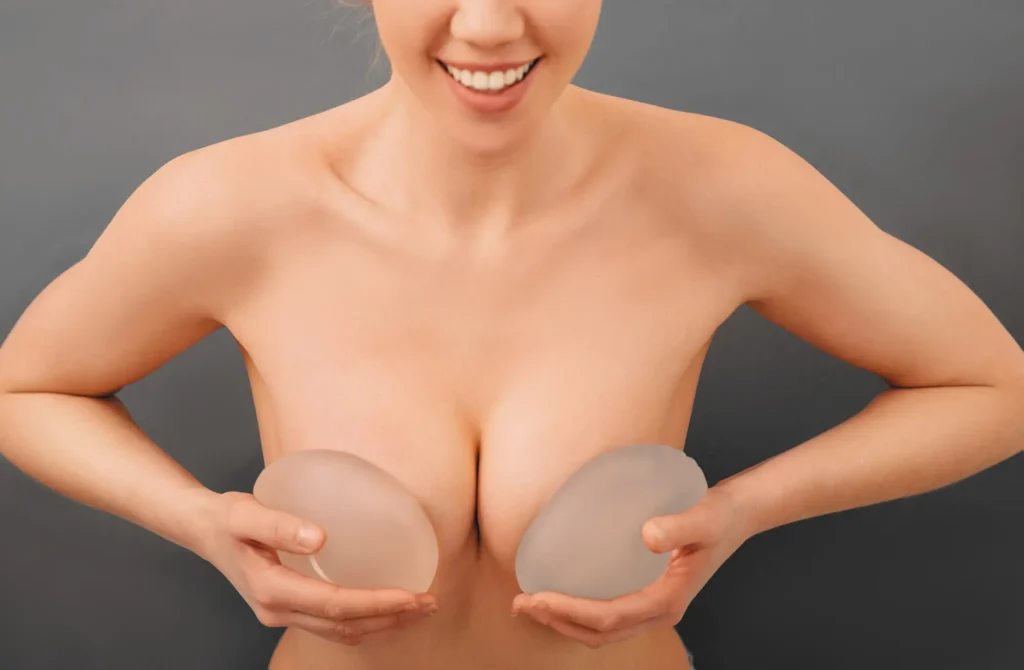
Understanding the Causes, Risks, and Solutions for Breast Implant Rippling and How to Prevent It for Natural-Looking Results
Breast implant rippling is the visible or palpable folding of an implant shell showing through the overlying skin. It is far more common than most patients expect. In a prospective study of 223 women followed for three years, 32% reported palpable rippling and 18% reported visible rippling. Most of it is mild, most of it is not a sign that anything has gone wrong, and most of it is treatable.
What follows is an evidence led guide to why rippling happens, which factors genuinely predict it, and what the published data says about implant type, placement and correction. Some of that data is more nuanced than the usual advice you will read online, and we have not smoothed it over.
- Rippling means folds in the implant shell becoming visible or palpable through the skin.
- Palpable rippling is common and usually not a clinical problem. Visible rippling is what prompts most consultations.
- Thin soft tissue coverage predicts rippling more reliably than the fill inside the implant.
- Low BMI, especially under 18.5, is the single most consistently reported risk factor.
- Subglandular placement leaves less coverage than submuscular or dual plane.
- Higher implant cohesivity is associated with measurably less rippling.
- Fat grafting works by thickening the tissue envelope rather than changing the implant.
- Rippling is almost never a sign of implant rupture, but it should still be assessed.
of women reported palpable rippling three years after augmentation
Swanson, PRS Global Open 2020
reported visible rippling over the same three year follow up
Swanson, PRS Global Open 2020
ripples found on ultrasound with silicone against saline, not a significant difference
Swanson, PRS Global Open 2020
approximate lifetime reoperation rate after primary breast augmentation
Cleve Clin J Med, 2019
All figures come from the peer reviewed sources listed at the end of this article. They describe the published study populations and are not a prediction of any individual outcome.
1 What Is Breast Implant Rippling?
Rippling is the appearance of folds, waves or wrinkles on the implant surface that become perceptible through the overlying skin. The folds are in the implant shell itself. What determines whether you can see or feel them is the thickness and quality of the tissue lying on top.
The US Food and Drug Administration lists it among the complications that occur in at least 1 percent of breast implant patients, describing it simply as “wrinkling of the implant that can be felt or seen through the skin”. It most often appears along the outer and lower borders of the breast, where tissue coverage is thinnest, and is frequently most obvious when leaning forward or lying on one side.
Palpable rippling and visible rippling are not the same thing
Palpable rippling can be felt by running a finger over the breast but is not apparent to the eye. It is a common finding rather than a complication, and most patients are entirely untroubled by it.
Visible rippling is apparent to the eye, either at rest or in certain positions. It ranges from subtle waviness in raking light to obvious ridges. This is the form that causes genuine distress and prompts most corrective consultations.
The published rates reflect that gap directly: 32% palpable against 18% visible in the same cohort of women.
2 Why Rippling Happens: The Mechanics
Rippling is a mechanical problem, not a biological one. An implant shell is flexible, not rigid. Wherever the shell is not held under tension from the inside, it folds, exactly as a partly filled water bag does.
- The shell exceeds its contents. When the volume inside is lower than the surface area of the casing requires, the surplus shell material has nowhere to go and buckles inward. This is why underfilling a saline implant makes rippling far more likely.
- Gravity and movement shift the filler. A liquid filler redistributes as you change position, leaving parts of the shell unsupported. A cross linked cohesive gel holds its shape and keeps tension across the shell continuously.
- Thin coverage transmits the fold to the surface. Generous breast tissue, fat and muscle mask shell irregularities. A thin, tight or inelastic covering layer passes them straight through to the skin.
The distinction that matters clinically. Almost every implant develops some shell folding. Whether you ever notice it is decided by the tissue on top, not by whether the folding exists. That is why two patients with identical implants can have completely different experiences.
3 Does Implant Type Really Make the Difference?
The mechanism strongly favours cohesive silicone, but when researchers measured rippling directly in subpectoral placement, the difference between saline and silicone did not reach statistical significance. This is more nuanced than the advice usually given, and it is worth understanding properly.
Eric Swanson followed 223 women having subpectoral augmentation, 145 with saline implants and 78 with silicone gel, for three years, assessing rippling by patient survey and by ultrasound. Ripples were detected on ultrasound in 24% of saline patients and 27% of silicone patients. Neither that difference nor the difference in reported rippling reached significance.
Saline and silicone breast implants produce similar degrees of rippling, as determined on outcome surveys and ultrasound examination.
Swanson E. “Prospective Study of Saline versus Silicone Gel Implants for Subpectoral Breast Augmentation.” Plastic and Reconstructive Surgery Global Open, 2020. 223 women, three year follow up.
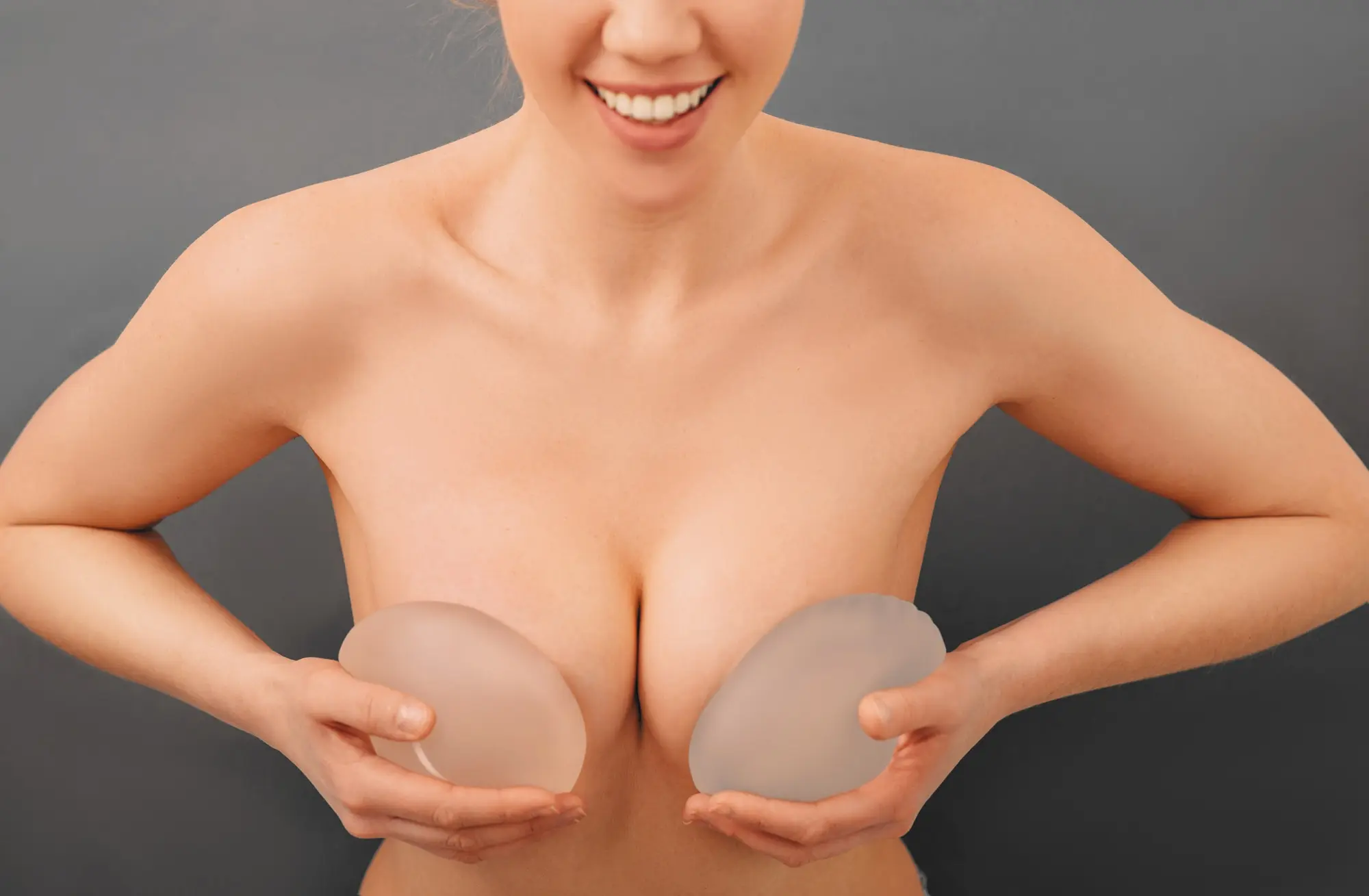
Two important qualifications keep this from being the whole story. First, every patient in that study had subpectoral placement, which already provides good coverage. The picture changes where coverage is thin: reviews of augmentation outcomes link visible rippling to smooth saline implants placed subglandularly in very slim patients specifically. Second, cohesivity varies within silicone as well as between fill types.
That second point has been measured. Parikh and colleagues compared implants of differing cohesivity in 129 patients and found significantly less rippling with more cohesive devices, with odds ratios of 0.30 for moderately cohesive and 0.39 for the most cohesive implants against the least cohesive group.
The use of highly cohesive implants in prepectoral IBR is associated with decreased rippling and fewer reoperations for fat grafting.
Parikh N, Gadiraju GK, Broyles JM, et al. “The Impact of Breast Implant Cohesivity on Rippling and Revision Procedures in 2-Stage Prepectoral Breast Reconstruction.” Aesthetic Surgery Journal Open Forum, 2024. Note that this study examined breast reconstruction rather than cosmetic augmentation.
What this means for you in practice. Saline implants are essentially not used in routine UK cosmetic practice, so for most patients here the real question is not saline against silicone. It is how cohesive the silicone device is, how well its volume matches your frame, and how much tissue will lie over it. All breast augmentation at Linia uses CE marked cohesive silicone gel implants.
4 Placement and Tissue Coverage
Placement matters because it determines how many layers of tissue sit between the implant and the skin. This is the variable a surgeon has most control over at the planning stage.
Subglandular
Implant sits between the breast gland and the pectoral muscle. Covered only by breast tissue and skin. Works well where native breast tissue is generous, but offers the least protection against visible rippling when tissue is thin.
Submuscular or dual plane
The pectoral muscle is interposed over the upper and central breast. This adds a substantial layer of coverage exactly where irregularities are most noticeable, and is the standard choice for patients with limited tissue.
Subfascial
Beneath the pectoral fascia but above the muscle. A middle ground that adds some coverage without the animation effects a fully submuscular position can create in some patients.
No placement eliminates rippling entirely. What submuscular and dual plane placement do is move the thinnest part of the coverage away from the upper pole, where you and other people are most likely to see it, and concentrate any residual risk at the lower and outer borders where it is more easily concealed.
5 Who Is Most at Risk?
The risk factors below are drawn from published outcome studies rather than from general impression. Having one or more does not make rippling inevitable, but it does change how your surgeon should plan.
| Risk factor | Strength of evidence | Why it matters |
|---|---|---|
| Low BMI | Strong | Ripples were more common in women with lower body mass indices. Visible rippling is particularly linked to a BMI below 18.5. |
| Minimal native breast tissue | Strong | Less glandular tissue means less cushioning, whatever your overall body composition. |
| Subglandular placement | Strong | Removes the muscle layer from the coverage, leaving only gland and skin over the implant. |
| Low cohesivity implant | Moderate | Less cohesive devices showed significantly more rippling than more cohesive ones in direct comparison. |
| Underfilled saline | Moderate | Mechanically the clearest cause of shell folding, though head to head data in subpectoral placement showed no significant difference overall. |
| Oversized implant for the frame | Moderate | Stretches and thins the tissue envelope over time, gradually reducing the coverage that was concealing the folds. |
| Weight loss after surgery | Moderate | Reduces subcutaneous fat and can unmask rippling that was previously hidden. A common reason rippling appears years later. |
6 Treatment Options
There is no single fix. Treatment either changes the implant, changes its position, or thickens the tissue over it. Which one is right depends on what is actually causing the problem in your case.

Implant exchange
The most commonly chosen surgical route. Moving to a more highly cohesive or form stable device reduces the tendency to fold. Adjusting the volume to one better matched to your tissue envelope often helps as much as changing the device itself.
Change of position
Converting a subglandular implant to submuscular or dual plane adds a full muscle layer of coverage. Where thin coverage is the root cause, this addresses it directly rather than working around it.
Fat grafting
Fat is harvested elsewhere, refined and injected into the tissue overlying the implant to thicken the envelope. It treats the coverage rather than the implant, feels natural, and more than one session is sometimes needed because not all transferred fat survives.
Acellular dermal matrix
A biological scaffold used to reinforce a very thin envelope. Reserved for complex revision cases and not needed by the large majority of patients with rippling.
Monitoring and reassurance
For mild palpable rippling that causes no aesthetic concern, doing nothing is a legitimate and often the best option. Regular review and clear guidance on what to watch for are what matter.
Combined approaches
In practice many revisions pair an implant exchange with fat grafting, changing both the device and the coverage in one operation. Your surgical plan should be built around your anatomy rather than a single technique.
Revision surgery is common, and worth planning for. The FDA is explicit that “breast implants are not considered lifetime devices” and that the longer they are in place, the greater the chance of developing a complication requiring further surgery. Published reoperation rates after primary augmentation approach 20% over a lifetime, the highest of any aesthetic procedure. You can read the full complication list on the FDA breast implant risks page.
7 Preventing Rippling Before Surgery
If you have not yet had augmentation, or you are planning a revision, these are the decisions that measurably shift your risk. All of them are made before you reach theatre.
- Choose a high cohesivity silicone gel implant
- Match implant volume honestly to your frame
- Have your tissue thickness measured, not estimated
- Consider submuscular or dual plane if coverage is thin
- Discuss fat grafting at the same time if you are very slim
- Aim for a stable weight before and after surgery
- Ask what happens if you later lose weight
- Ask specifically about your own rippling risk, not the average
The question worth asking at consultation. Rather than “do these implants ripple”, ask “how much tissue will be covering this implant in my case, and where is it thinnest”. That is the variable the evidence keeps pointing back to, and a surgeon should be able to answer it specifically for you.
8 When to Seek Advice
Book a review if you notice any of the following. None of them is an emergency, and all of them are easier to address early than late.
- Visible wrinkling or waviness on one or both breasts, at rest or in particular positions
- Palpable ridges or folds that were not there in the months after your surgery
- A gradual change in breast shape or contour, especially following weight loss
- Any change that is causing you distress, even if you are unsure whether it is a clinical problem
Rippling is very rarely a sign of rupture. It reflects shell folding and thin coverage, not implant failure. That said, a proper assessment, which may include ultrasound or MRI where implant integrity is in question, is the only way to confirm that, and it is worth having rather than assuming.
How assessment works at Linia
Type, size, age and placement of your current implants, and the timeline over which the rippling appeared or worsened. Rippling that develops years later usually has a different cause from rippling present from the start.
Assessment in multiple positions to characterise where and how severe the rippling is, alongside a direct measurement of the quality and thickness of the overlying tissue.
Ultrasound or MRI where implant integrity or tissue characteristics are unclear, then an individualised plan: surgical revision, fat grafting, or in milder cases monitoring and reassurance.
9 Frequently Asked Questions
Is breast implant rippling normal?
Palpable rippling is common. In a prospective study of 223 women followed for three years, 32% reported rippling they could feel and 18% reported rippling they could see. Rippling you can only feel is generally regarded as a normal finding rather than a complication. Rippling you can see is the form that usually warrants review.
Does rippling mean my implant has ruptured?
Almost never. Rippling is folding of an intact implant shell showing through thin tissue, not a sign of failure. If there is any doubt about implant integrity, ultrasound or MRI can confirm it, and that assessment is worth having rather than assuming either way.
Do silicone implants ripple less than saline?
Mechanically, cohesive gel holds tension across the shell better than liquid saline, so it should ripple less. When measured directly in a three year prospective study of subpectoral augmentation, however, the difference did not reach statistical significance: ultrasound found ripples in 24% of saline patients and 27% of silicone patients. The gap is clearest where tissue coverage is thin, particularly with smooth saline implants placed subglandularly in very slim patients.
Why has rippling appeared years after my surgery?
Usually because the coverage has thinned rather than because the implant has changed. Weight loss reduces subcutaneous fat, and a large implant gradually stretches the tissue envelope over time. Both can unmask folding that was always present but previously concealed.
Can rippling be fixed without changing my implants?
Often, yes. Fat grafting thickens the tissue over the implant rather than replacing the device, which addresses the cause directly when thin coverage is the problem. More than one session is sometimes needed because a proportion of transferred fat does not survive. Where the implant itself is the issue, exchange for a more cohesive device is usually combined with it.
Will losing weight make rippling worse?
It can. Lower body mass index is one of the most consistently reported risk factors for rippling, and losing weight after augmentation reduces the fat layer that was providing coverage. If you are planning significant weight loss, it is worth reaching a stable weight before any augmentation or revision.
Does implant placement change the risk?
Yes. Submuscular and dual plane placement add the pectoral muscle as an extra layer over the upper and central breast, where irregularities are most visible. Subglandular placement leaves only gland and skin over the implant. For patients with limited native tissue, this is one of the most influential decisions in the whole plan.
How likely am I to need revision surgery at some point?
Published reoperation rates after primary breast augmentation approach 20% over a patient’s lifetime, which is the highest of any aesthetic procedure. The FDA states plainly that breast implants are not lifetime devices and that complication risk rises the longer they remain in place. Planning for the possibility of future surgery is a realistic part of the decision.
10 Talking It Through With Us
If rippling is bothering you, or you are planning breast enlargement with implants and want to understand your own risk before committing, a consultation is the place to get a specific answer rather than a general one.
We will measure your tissue coverage, discuss implant cohesivity and volume against your frame, and be honest about which placement suits your anatomy. Where rippling has developed after surgery elsewhere, we will assess whether the cause is the device, the position, the coverage, a capsule problem, or a combination, and tell you plainly when the right answer is monitoring rather than more surgery.
Sources & references
- Swanson E. “Prospective Study of Saline versus Silicone Gel Implants for Subpectoral Breast Augmentation.” Plastic and Reconstructive Surgery Global Open, 2020. 223 women (145 saline, 78 silicone gel), three year follow up. Visible rippling 18%, palpable rippling 32%, ultrasound detected ripples 24% saline against 27% silicone, none of the differences significant.
- Parikh N, Gadiraju GK, Prospero M, et al. “The Impact of Breast Implant Cohesivity on Rippling and Revision Procedures in 2-Stage Prepectoral Breast Reconstruction.” Aesthetic Surgery Journal Open Forum, 2024. 129 patients. Odds ratio for rippling 0.30 for moderately cohesive and 0.39 for most cohesive implants against least cohesive, both P below .05.
- “Breast augmentation surgery: Clinical considerations.” Cleveland Clinic Journal of Medicine, 2019;86(2):111. Source of the association between visible rippling and a body mass index below 18.5, and of the lifetime reoperation rate approaching 20%.
- US Food and Drug Administration. “Risks and Complications of Breast Implants”, fda.gov. Source of the wrinkling and rippling definition and the statement that breast implants are not lifetime devices.
This page is general information and does not replace individual medical advice. Rates quoted are from published studies and are not a prediction of your own outcome. Your surgeon will discuss the risks specific to your anatomy and your implants at consultation.
Concerned about rippling?
Book a consultation with our specialist surgeons for an honest assessment of what is causing it, whether it needs treating at all, and which option fits your anatomy.