
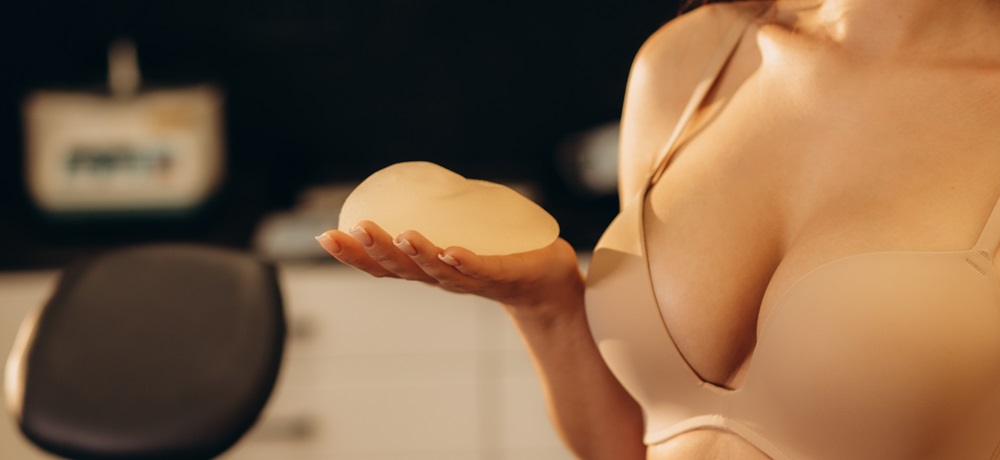
Discover the Differences Between Saline and Silicone Breast Implants to Choose the Best Option for You
Breast augmentation remains one of the most popular cosmetic procedures worldwide, and for good reason. It can enhance your confidence, restore volume lost after pregnancy or weight loss, and help you achieve the body proportions you’ve always desired. However, one of the most crucial decisions you’ll face is choosing between saline and silicone breast implants.
At Linia Cosmetic Surgery, we believe that informed patients make the best decisions. This comprehensive guide will walk you through everything you need to know about both implant types, helping you make the choice that’s perfectly suited to your body, lifestyle, and aesthetic goals.
Understanding Breast Implants: The Basics
Before diving into the specifics of saline versus silicone, it’s important to understand what breast implants are and how they work.
Breast implants are medical devices designed to enhance or reconstruct the breast. They consist of an outer silicone shell (in both saline and silicone implants) and an inner filling material. The implants can be placed either above or below the chest muscle, depending on your anatomy and desired results.
Modern breast implants have come a long way since their introduction. Today’s implants are safer, more natural-looking, and designed with advanced technology to provide long-lasting, beautiful results.
Saline Breast Implants: In-Depth Analysis
What Are Saline Implants?
Saline breast implants feature a solid silicone elastomer shell that is filled with sterile saline solution (salt water) during the surgical procedure. This filling can be adjusted during surgery, allowing your surgeon to fine-tune the size and achieve optimal symmetry.
The Complete Advantages of Saline Implants
Smaller Surgical Incisions: Since saline implants are inserted empty and filled once in position, they require smaller incisions—typically around 3-4 cm. This means less scarring and potentially faster healing. The incision can be made in less conspicuous locations, such as under the breast, around the areola, or even through the belly button.
Immediate Rupture Detection: One of the most significant advantages of saline implants is that if they rupture or leak, you’ll know immediately. The breast will noticeably deflate over a few hours or days as your body safely absorbs the harmless saline solution. This eliminates the need for routine imaging to check implant integrity.
Safety Profile: The sterile saline solution is identical to the fluid that makes up much of your body. If a rupture occurs, there are no health risks associated with the saline being absorbed into your body—it’s simply processed and eliminated naturally.
Cost-Effectiveness: Saline implants are generally more affordable than silicone implants, making breast augmentation more accessible to a wider range of patients without compromising safety or satisfaction.
Adjustability: During surgery, your surgeon can fine-tune the amount of saline in each implant to achieve perfect symmetry, which is particularly beneficial if you have natural breast asymmetry.
Age Requirements: Saline implants are approved for cosmetic breast augmentation in women aged 18 and older, making them an option for younger patients seeking enhancement.
Considerations and Potential Drawbacks
Texture and Feel: Saline implants tend to feel firmer and less natural than silicone implants. Some patients describe them as feeling more like a water balloon, particularly when lying down. This is most noticeable in women with minimal natural breast tissue.
Rippling and Wrinkling: Saline implants have a higher risk of visible rippling or wrinkling, especially in thin patients or those with little breast tissue coverage. These ripples may be visible through the skin or palpable when touching the breast.
Weight and Movement: Some patients report that saline implants feel heavier and may move differently than natural breast tissue, particularly with physical activity.
Aesthetic Results: In very slim patients or those seeking a very natural look, saline implants may not provide the same aesthetic outcome as silicone, particularly in the upper pole of the breast.

Silicone Breast Implants: Comprehensive Overview
What Are Silicone Implants?
Silicone breast implants consist of a silicone outer shell filled with a cohesive silicone gel. The gel comes in various consistencies, from softer to more form-stable (often called “gummy bear” implants). These implants are pre-filled by the manufacturer and come in a wide range of sizes, shapes, and profiles.
The Complete Advantages of Silicone Implants
Superior Natural Feel: The cohesive silicone gel closely mimics the density and movement of natural breast tissue. Most patients and surgeons agree that silicone implants provide the most natural feel, making them virtually indistinguishable from natural breasts to the touch.
Natural Appearance: Silicone implants typically create a more natural breast contour with smoother transitions and better upper pole fullness. They move more naturally with body movement and in different positions.
Reduced Rippling: The cohesive gel significantly reduces the risk of visible rippling or wrinkling, even in patients with minimal natural breast tissue or very low body fat percentages.
Variety of Options: Silicone implants come in numerous shapes (round or anatomical/teardrop), profiles (low, moderate, high), and gel consistencies, allowing for highly customised results tailored to your specific anatomy and goals.
Form-Stable Options: Modern cohesive gel implants, particularly “gummy bear” implants, maintain their shape even if the shell is compromised. This form-stability provides consistent, long-lasting results.
Better Results for Thin Patients: For patients with minimal breast tissue, silicone implants often provide superior aesthetic outcomes with a more natural appearance.
Considerations and Potential Drawbacks
Larger Incisions Required: Because silicone implants are pre-filled, they require slightly larger incisions for insertion. However, skilled surgeons can still place these incisions in discreet locations to minimize visible scarring.
Silent Rupture: If a silicone implant ruptures, the cohesive gel typically remains within the implant shell or the surrounding scar tissue capsule. This “silent rupture” may not be immediately noticeable, which is why regular monitoring is recommended.
Monitoring Requirements: Medical guidelines suggest periodic MRI or ultrasound examinations (typically every few years) to check the integrity of silicone implants. This adds to the long-term maintenance requirements and associated costs.
Higher Initial Cost: Silicone implants are more expensive than saline options, though the exact price difference varies.
Age Restrictions: In some jurisdictions, silicone gel implants for cosmetic augmentation are approved for women aged 22 and older, though this varies by country and regulatory body.
Rupture Management: If rupture is detected, the implant should be removed or replaced, and sometimes the surrounding capsule needs to be removed as well, which can be a more involved procedure than with saline.
The Evolution of Breast Implant Technology
Understanding the history and evolution of breast implant technology can provide valuable context for your decision.
The first silicone breast implants were introduced in the 1960s. Early versions had thinner shells and less cohesive gel, which led to higher rates of rupture, leakage, and complications. These concerns led to increased scrutiny and temporary restrictions on silicone implants in some countries.
Today’s implants bear little resemblance to those early versions. Current generation implants feature advanced shell technology with multiple layers of high-strength silicone elastomer that resist rupture. Modern silicone gels range from soft cohesive to highly cohesive (“form-stable”), providing options for different aesthetic goals while maintaining safety. Implants are also available with different surface textures and anatomical shapes to suit individual needs.
Factors to Consider When Making Your Choice
Your Body Type and Natural Anatomy
Breast Tissue Coverage: If you have ample natural breast tissue, either implant type can provide excellent results. However, if you’re thin with minimal breast tissue, silicone implants typically provide a more natural appearance as they’re less likely to show rippling or implant edges.
Chest Wall Anatomy: Your rib cage shape, chest width, and natural breast pocket dimensions all influence which implant type and size will work best for you.
Skin Quality: The thickness and elasticity of your skin affect how well it can camouflage an implant. Thicker skin provides better coverage for either implant type.
Body Frame: Your overall body proportions, shoulder width, and height all factor into selecting the right implant size and type to maintain natural-looking proportions.
Your Aesthetic Goals
Desired Size Increase: Are you looking for a subtle enhancement or a dramatic transformation? While both implant types come in various sizes, your goals may influence which type will deliver the most satisfying results.
Look and Feel Priorities: Rank what matters most to you—the most natural feel, the most natural appearance, cost considerations, or minimal long-term maintenance. This helps guide your decision.
Activity Level: Consider how your breasts will look and feel during various activities. If you’re very active or athletic, you may have specific concerns about how the implants will perform during exercise.
Clothing Goals: Think about the types of clothing you wear most often. Do you want to fill out swimwear, enhance your silhouette in fitted tops, or simply feel more proportionate in everyday clothing?
Lifestyle Considerations
Budget: Consider both the initial cost and long-term expenses. While silicone implants cost more upfront, both types may require monitoring or eventual replacement over time.
Follow-Up Commitment: Are you willing and able to attend regular follow-up appointments and undergo periodic MRI or ultrasound scans if you choose silicone implants?
Travel and Access to Care: If you travel frequently or live far from specialized medical care, the easier rupture detection of saline implants might provide peace of mind.
Age and Life Stage
Current Age: While saline implants are approved for women 18 and older and silicone for 22 and older (in many jurisdictions), consider your life stage and how long you expect to have the implants.
Future Pregnancy Plans: Both implant types are compatible with pregnancy and breastfeeding, but it’s worth discussing your plans with your surgeon as pregnancy can affect breast size and shape.
Weight Stability: Significant weight fluctuations can affect your results with either implant type. It’s best to be at a stable, healthy weight before surgery.
Implant Placement Options
Regardless of which fill material you choose, you’ll also need to decide on implant placement:
Submuscular (Under the Muscle)
Advantages:
- More natural-looking upper breast contour
- Easier mammogram readings
- Lower risk of capsular contracture
- Better implant coverage, especially in thin patients
- Less risk of visible rippling
Considerations:
- Longer recovery period
- More post-operative discomfort
- Potential for animation deformity (implant movement with muscle flexing)
Suglandular (Over the Muscle)
Advantages:
- Shorter, less painful recovery
- More projection and fullness in upper breast
- No animation deformity
- May be better for athletic women
Considerations:
- Higher risk of capsular contracture
- May be more palpable or visible, especially in thin patients
- Can interfere with mammography
Dual Plane (Combination)
This technique places part of the implant under the muscle and part under the breast tissue, potentially offering the benefits of both approaches.
What to Expect: The Consultation Process
Your consultation is a crucial step in determining which implant type is right for you. Here’s what you can expect at Linia Cosmetic Surgery:
Initial Assessment
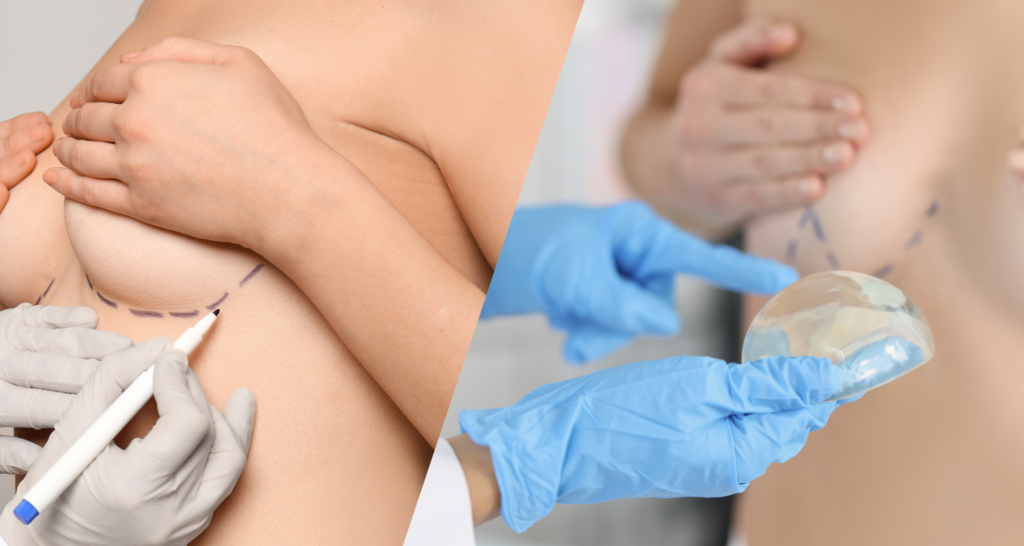
Your surgeon will conduct a thorough examination of your breasts, measuring breast width, existing tissue, nipple position, and chest wall characteristics. They’ll assess your skin quality and discuss any asymmetries.
Goal Discussion
You’ll have an in-depth conversation about your aesthetic goals, lifestyle, and expectations. Bring photos of results you like (and don’t like) to help communicate your vision.
Implant Sizing
You’ll likely try on different sizes using sizers placed in a surgical bra to visualize how different volumes will look with your frame. This is an invaluable part of the decision-making process.
Touch and Feel
You’ll have the opportunity to hold and feel sample saline and silicone implants to compare their weight and texture, helping you make a more informed decision.
Risk Discussion
Your surgeon will thoroughly review the risks, benefits, and potential complications of each implant type, ensuring you have realistic expectations.
Customized Recommendation
Based on all these factors, your surgeon will provide a professional recommendation while respecting your personal preferences and goals.
Long-Term Considerations
Implant Longevity
Breast implants are not lifetime devices. While modern implants are very durable, they may need to be replaced at some point due to rupture, capsular contracture, or simply your desire to change size or style. Most modern implants can last 10-20+ years, though some may need replacement sooner while others last even longer.
Maintenance Requirements
Saline Implants: No special monitoring required beyond regular self-exams and annual check-ups with your surgeon. Any rupture will be immediately obvious.
Silicone Implants: Recommended monitoring schedule typically includes MRI or ultrasound several years after implantation, with follow-up imaging every few years thereafter, along with regular self-exams and annual clinical exams.
Potential Complications (Both Types)
Capsular Contracture: Scar tissue forming around the implant may tighten, causing firmness or distortion. Rates vary but are generally low with modern implants and techniques.
Rupture or Deflation: Both implant types can rupture, though modern implants are highly durable. Rupture rates are low but increase with implant age.
Rippling: More common with saline implants but can occur with silicone in thin patients.
Implant Malposition: The implant may shift from its intended position, requiring revision surgery.
Infection: Rare but possible with any surgical procedure, typically occurring soon after surgery.
Changes in Nipple Sensation: Some patients experience temporary or permanent changes in nipple sensitivity.
Real Patient Perspectives
While individual experiences vary, understanding common patient feedback can be helpful:
Saline Implant Patient Experiences
Patients often report satisfaction with cost savings, peace of mind knowing rupture would be immediately obvious, and appreciation for smaller scars. Some wish they had chosen silicone for a more natural feel, while others are very happy with their results, especially when placed under the muscle.
Silicone Implant Patient Experiences
Patients frequently note being extremely happy with the natural look and feel, considering the additional cost worth it for the superior texture, and appreciating the variety of shape options. Silicone patients typically report high satisfaction rates, particularly thin patients who benefit most from the reduced rippling risk.