Refresh Tired, Heavy Eyelids
Blepharoplasty in London
Blepharoplasty removes excess skin and puffiness from the eyelids to restore a brighter, more rested appearance. Performed by experienced facial surgeons at our Harley Street clinic with a focus on natural, refined results.
- 15,000+ Patients
- Personalised Care
- 5-Star Rated
- Real Results
25+ yrs of excellence – consultation, procedure and aftercare.
Eye lid surgery is commonly sought by those experiencing age-related sagging or puffiness around the eyes, as well as individuals with vision problems caused by drooping eyelids.
15,000+
Cosmetic Surgery Operations Performed
25+
Years Experience in Cosmetic Surgery


Your Consultation and Preparation
Your experience begins with a detailed consultation with a Linia Cosmetic Surgery facial surgeon at our Harley Street clinic. Your eye structure, skin quality, and goals are carefully assessed to plan a precise, natural-looking result.
As part of this process, your medical history, medications, and lifestyle are reviewed to ensure you are fully prepared for surgery. You may be advised to pause certain medications, stop smoking, and make simple arrangements at home for a comfortable recovery.
Clinical photographs and gentle measurements may be taken to support accurate surgical planning. Every plan is tailored specifically to you.

Upper Blepharoplasty
Improves vision & has awakening, anti-ageing outcomes

Lower Blepharoplasty
Targets puffiness & lower eyelid laxity
Procedure
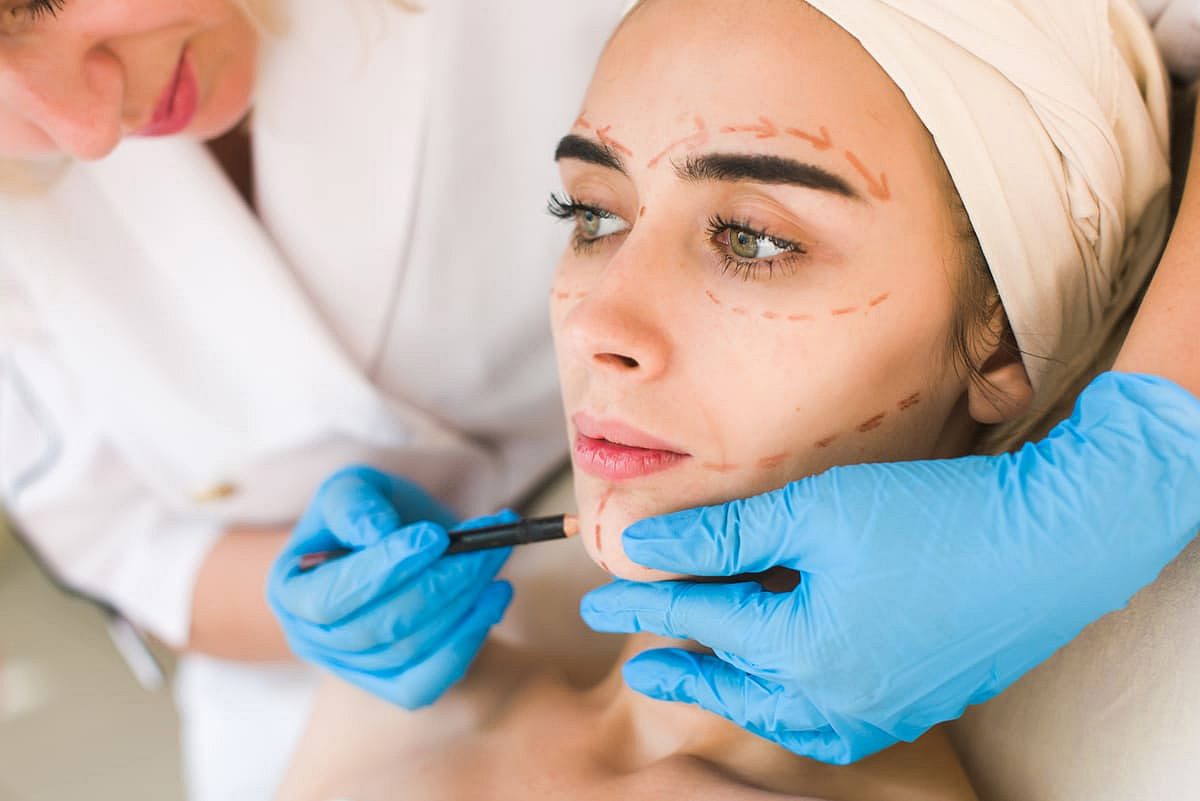
Blepharoplasty is typically an outpatient procedure, allowing you to go home the same day. Local anesthesia is often used, with only a few cases requiring general anesthesia. For the upper eyelids, a small incision is made to remove excess skin, muscle, and fat. The lower eyelid surgery usually focuses on removing fat to reduce under-eye bags, and occasionally a small amount of skin is removed. The incision may be hidden inside the eyelid or under the lower lashes. In some cases, the lower eyelid may be tightened.
Recovery
Recovery after blepharoplasty is usually quick. You’ll rest in a recovery room before going home. Expect some swelling and discomfort, with the possibility of blurry vision and light sensitivity. These side effects typically resolve in a couple of days. Ice packs and medications like ibuprofen can help with recovery. For two weeks, contact lenses should be avoided. After a few days, a follow-up appointment is needed to remove stitches and assess healing. Careful cleaning of the area is essential.
Questions & Answers
Some common questions we get asked about Eyelid Cosmetic Surgery
What is eyelid surgery (blepharoplasty)?
Eyelid surgery, also known as blepharoplasty, is a surgical procedure aimed at rejuvenating the appearance of the eyelids by removing excess skin, fat, or muscle. It can address concerns such as droopy eyelids, puffiness, bags under the eyes, or sagging skin around the eyes.
Why is eyelid surgery performed?
Eyelid surgery may be performed for various reasons, including:
- Correcting droopy or sagging upper eyelids that may impair vision or create a tired appearance.
- Removing excess skin and fat from the lower eyelids to reduce puffiness or bags under the eyes.
- Improving the overall appearance of the eyes for a more youthful and refreshed look.
How is eyelid surgery performed?
The specific technique used for eyelid surgery depends on the patient’s individual needs and goals. Generally, the procedure involves making precise incisions along the natural creases of the eyelids to access the underlying tissues. Excess skin, fat, or muscle is then removed or repositioned as needed to achieve the desired aesthetic outcome. The incisions are carefully closed with sutures, resulting in minimal scarring.
Is eyelid surgery performed under anesthesia?
Yes, eyelid surgery is typically performed under local anesthesia with sedation or general anesthesia, depending on the extent of the procedure and the patient’s preference.
What is the recovery process like after eyelid surgery?
After eyelid surgery, patients may experience mild discomfort, swelling, bruising, and temporary blurred vision. Cold compresses and pain medication may be prescribed to manage these symptoms. Patients are advised to avoid strenuous activities, keep their head elevated, and follow post-operative care instructions provided by their surgeon.
Are there any risks or complications associated with eyelid surgery?
While eyelid surgery is generally safe, like any surgical procedure, it carries certain risks, including:
- Bleeding and bruising
- Infection
- Dry eyes
- Temporary or permanent changes in eyelid sensation
- Asymmetry or uneven results
- Difficulty closing the eyes completely
- Scarring
When will I see the final results of eyelid surgery?
While some initial improvement may be noticeable soon after the surgery, it may take several weeks to months for the swelling to fully subside and the final results to become apparent. The eyelids will continue to refine in shape and appearance over time.
How long do the results of eyelid surgery last?
The results of eyelid surgery are generally long-lasting, especially when performed by a skilled and experienced surgeon. However, factors such as aging, sun exposure, and lifestyle habits may affect the longevity of the results.
How can I schedule a consultation for eyelid surgery?
If you’re considering eyelid surgery, we recommend scheduling a consultation with a Surgeon. During the consultation, the surgeon will evaluate your concerns, discuss your goals, and recommend the most suitable treatment options for you.
What does the procedure involve?
The procedure is usually performed under heavy or “twilight” sedation, which generally means that an overnight stay in hospital is not necessary and that recovery time is decreased. Incisions are made following the natural lines of your eyelids in the creases of the upper lids and just below the lashes in the lower lids. These incisions are extended a little way into the crow’s feet or laughter lines at the corner of the eye. Through this incision surplus fat and skin is removed and sagging muscle tightened. In the lower eyelid the cutting of skin may not be necessary and fat may be removed from inside the eyelid.
What are the risks and likely after-effects?
Cosmetic Surgery, like any other surgery, involves a “trauma” to the human body and there are risks associated with any procedure. Each person’s body is different, and your general health, level of fitness, age and genetic profile will all have am effect on the speed of healing and also on the risk of side-effects.
If you smoke, drink alcohol, are overweight and/or take drugs for medical Or other reaons, the risk of complication during and after surgery can be greatly increased. Smoking, in particular, is discouraged because it increases the risk both of infection, wound breakdown and thrombosis be controlled and reduced by taking regular prescribed medication (blood clots).
Occasionally a pool of blood (haematoma) can collect under the skin After the operation, but this usually disperses over two or three weeks. If very large, your surgeon will drain it. Rarely, a lower eyelid may droop, a condition called ectropion. This can be corrected by further surgery
What will happen after the operation?
Post-Op
Your surgeon will see you when you have come round from the anaesthetic to check that all is well, and you will usually be discharged the same day.
You’ll be given medication and post-operative instructions along with appropriate telephone numbers in case you need to contact us at any time.
Week 1 – 2
For the first few days after the operation you will be advised to keep your head elevated and use cold compresses to reduce swelling. You will also
be able to use a prescribed ointment for the first few days. After a week or so you will be able to apply it soon afterwards. You will see our nurse who will remove the stitches, and if you use make-up westerly for a few weeks afterwards. Occasionally you may experience.
Bruising and swelling will gradually subside although the eyes may remain dryness and itchiness. Tightening of scars can make lids feel heavy or
“different” for the fist few weeks. Vision may be hazy for first 1-2 weeks.
Weeks 8 – 12
Your surgeon will see you again, usually 8-10 weeks after the procedure for a full post-operative check. By this stage all swelling should have disappeared and scars will gradually fade over a period of a few months.
Full post-operative cover
We’re confident that you will be delighted with the results. For that reason, we guarantee that we will provide post-operative cover for a full three years after you procedure. It’s our way of ensuring that you have peace of mind and confidence in Linia.
Period of reflection
Cosmetic surgery is a purely elective procedure and careful consideration should be given to both the potential benefits and the risks, before making a decision to proceed. Linia recommends that, following consultation with your surgeon, you allow a period of at least fourteen days before making a decision.
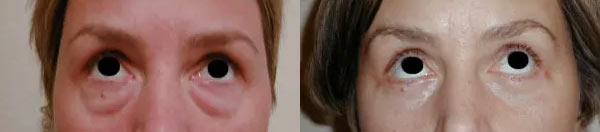
Before & After
Eyelid Surgery
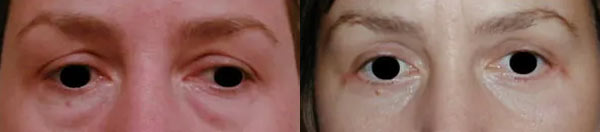
Click the photos to see before and after pictures. Individual results may vary.
Are you ready to achieve the body you’ve always wanted? Book a free consultation
The LINIA Promise
- At LINIA, we promise to treat you as a valued individual with the utmost dignity and privacy.
- At LINIA, we promise to ensure that your treatment is tailored to your personal needs.
- At LINIA, we promise to provide post-operative care for life. T&C’s apply.
- At LINIA we promise to provide you free refinement surgery. T&C’s apply.
- At LINIA, we promise to be available for 24-hour cover.

Linia Cosmetic Surgery – London & Across the UK – As Seen On









What Our Patients Say
For over 25 years, patients have trusted us for expert treatments. Here’s what they have to say.
Just a quick note to say Thank you for my new boobs!!
I have always felt out of proportion, but now i feel whole for The first time in my life!
Thank you to you all for your care d expertise, and I hope to see you all again when I come down with Kristi next year.
Love Emma Baker (the twins!!)
🟊🟊🟊🟊🟊
Mr Aslam,
You kindly said you would be able to send me my “before + after” photo’s if I wrote to you, I would be grateful if I could have them to continue to admire your great work!!!
Many thanks,
🟊🟊🟊🟊🟊
Dear Mr Aslam, Thank you so much for everything you have done. I’m so happy with the results!
Best wishes,
🟊🟊🟊🟊🟊
Excellent service. Kind, friendly, reassuring and very professional from walking through the door to leaving resulting in outstanding results! Thank you
🟊🟊🟊🟊🟊
I honestly couldn’t recommend Linia enough, from start to finish they were absolutely amazing and my PC Lauren was such a star throughout. They turned what was a stressful situation for me from being let down by another company into such an exciting experience and my results are what I always dreamt of x
🟊🟊🟊🟊🟊
I just want to say a big thankyou to the whole team!! I am absolutely amazed with the result. It was exactly how I wanted my breast to be. Thankyou Dr. Irshad from the consultation to the actual surgery. Thankyou Mojdeh you have been amazing!! Made me feel comfortable throughout the journey and reassured me with everything. THANKYOU ALL❤️
🟊🟊🟊🟊🟊
The process was amazing from start to finish. Dr Irshad did an amazing augmentation and I’m extremely happy with my results. His team were great. My Patient Support Advisor Jayne was always on hand if I had any issues or questions. I felt in safe hand with the surgical team. The hospital was lovely, clean and staff were friendly. I would 100% use them again in the future!
🟊🟊🟊🟊🟊
The experience was absolutely amazing. I was in and out within 4 hours. The employees were very friendly and helpful. Mr Aslam was wonderful. He talked me through every step of the process. I was very well looked after and would highly recommend him to anyone. Many thanks to everyone at Harley St. Sobia you have been great. Thank you!
🟊🟊🟊🟊🟊
I had a ba 3 weeks ago and I cannot THANK everyone enough. Everyone I met were amazing with me and so kind. I got quite emotional when I woke up after surgery and the ladies looking after me cared for me so much and I can’t be happier. Definitely recommend x
🟊🟊🟊🟊🟊
I had treatment with Dr Aslam, he and his staff are lovely, attentive and caring. Dr Aslam did an exceptional job with my treatment. Something that was my biggest insecurity I feel is now one of my assets! Highly recommend! Thank you so much for everything you have done.
🟊🟊🟊🟊🟊
Had treatment by Dr. Irshad at Harley Street. Cant thank him or his team enough, the results are amazing!! Highly recommend Linia and Dr. Irshad for anyone looking into cosmetic surgery. The first consultation, the operation and post-op meetings have been great! 10/10
🟊🟊🟊🟊🟊
I can’t thank Linea enough for the amazing experience they provided me with, from consultations all the way through to post op appointments. Dr Aslam and his team were fantastic , I would highly reccomend them!
🟊🟊🟊🟊🟊
I’ve no complaints at all his surgery and staff are great and he’s in Harley Street(London) for a reason thanks Dr Aslam your clearly a very skilled professional
🟊🟊🟊🟊🟊
Very good experience, excellent environment and good treatment. Recommended
🟊🟊🟊🟊🟊
Hello Everyone – I recently attended Linia Cosmetic Clinic at Harley Street. Yes! I was scared, nervous and excited at the prospect of an “S” lift, eye procedure and B.A whilst being aware and awake. SOUNDS silly but l enjoyed it, listening to everything being explained and some lovely music of my choice. Most important of all were the staff and Mr Aslam who made you feel relaxed and confident. So anyone considering? GO FOR IT.
🟊🟊🟊🟊🟊
Neck Lift Procedure – Quick and Efficient. Good Quality Care and Follow Up. Very Good Results. Pleasant and Professional Staff. Experience was as Described.
🟊🟊🟊🟊🟊
Upper Eye Lid Surgery – I would highly recommend Linia they were very efficient from consultation through to the aftercare. I am very pleased with the surgery Dr Aslam carried out. I had the same surgery 10 years ago with Spire with minimal success. Thank you Linia.
🟊🟊🟊🟊🟊
Customer Service was excellent, staff were very supportive both prior to and following the procedure, answering any questions, worries or concerns that I had very quickly and thoroughly. Would recommend Linia and would definitely consider other procedures to be performed at Linia
🟊🟊🟊🟊🟊
Dr Aslam has been great during this experience. The Linia team and nurse staff have also done all they could to support me. I found having my op under local strange at first (I have a fear of needles). I was very worried – but having it done was great compared to general. My recovery time was much less and I was back to work much sooner than expected.
🟊🟊🟊🟊🟊
Local anaesthetic was a much better experience than general. It was more relaxed and less painful. Recovery time was a lot quicker – there was no drowsiness or feeling sick. I would definitely use this option again if needed.
🟊🟊🟊🟊🟊
Latest Blogs
-

How Asian Eyelid Surgery Can Transform Your Look Safely
Asian eyelid surgery, also known as double eyelid surgery or Asian blepharoplasty, is one of the most commonly…
-
Why Some Patients Need a Revision or Secondary Facelift
What is a Revision or Secondary Facelift? A revision facelift, also known as a secondary facelift, is a…
-

Understanding the Key Differences Between High and Low Profile Breast Implants
Choosing the right breast implants is one of the most important decisions you’ll make during your breast augmentation…
-

A detailed and comprehensive guide to revision breast augmentation, covering causes, surgical options, risks, and long-term results.
Breast augmentation remains one of the most popular cosmetic procedures worldwide, offering transformative results for countless patients. However,…
-

Everything You Need to Know About an Ethnic Nose Job and Its Results
Ethnic rhinoplasty, commonly referred to as an ethnic nose job, represents a specialised branch of cosmetic surgery that…
-

A Complete Look at How Anchor Incision Breast Reduction Transforms Your Breasts
For women experiencing physical discomfort and lifestyle limitations due to overly large breasts, anchor incision breast reduction offers…
-
Understand the Differences Between Teardrop and Round Breast Implants, Their Pros and Cons, and What to Expect from Surgery
Choosing breast implants is one of the most significant decisions you’ll make during your breast augmentation journey. At…
-
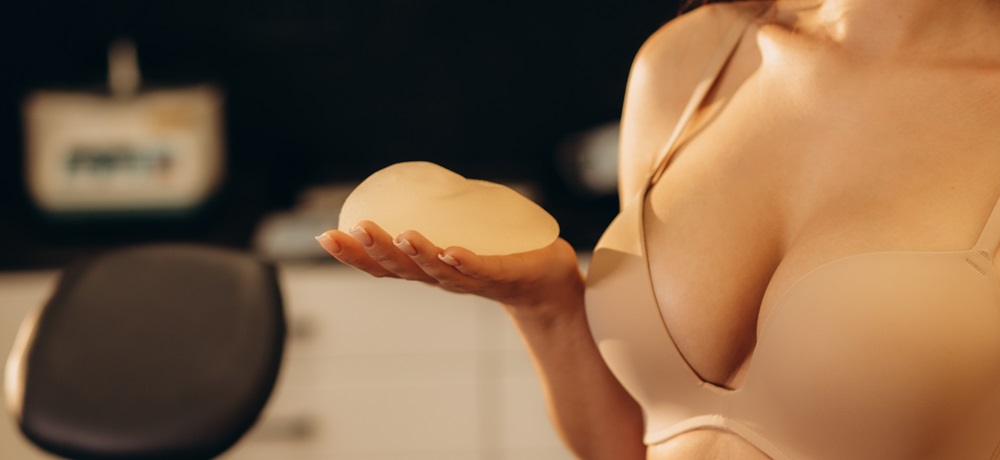
Discover the Differences Between Saline and Silicone Breast Implants to Choose the Best Option for You
Breast augmentation remains one of the most popular cosmetic procedures worldwide, and for good reason. It can enhance…
Request a consultation
"*" indicates required fields

Premier Cosmetic Surgery on Harley Street
Enquire Online
Opening Hours:
- Monday – Thursday10 am – 8 pm
- Friday10 am – 5 pm
- Saturday10 am – 4 pm
Are you ready to achieve the body you’ve always wanted?
in-clinic & Virtual consultations
Partners & Awards